
4 Best Ways for Selling a Home in California
Even though the information on this web page is provided by a qualified industry expert, it should not be considered as legal, tax, financial or investment advice. Since every individual’s situation is unique, a qualified professional should be consulted before making financial decisions.
This article details how to sell a house in California by using four different methods, with highlights of the pros and cons for each approach.
It also explains the steps involved in selling a home in California.
Let’s start off with a private home sale in the Golden State.
#1 How to Sell a House in California Privately

There are several avenues to selling a home in California. Some take more effort and have direct costs to the homeowner.
What do you avoid when you sell a property in California privately?
You’ll avoid spending time and the expense of readying your house for public showings. You won’t have strangers filing through your home during open house events.
Photos or videos of the rooms in your house won’t be featured on the internet for everyone to see. And you won’t have to wait for potential buyers to see your ads and contact you.
These are just a few of things you’ll avoid by selling your home privately.
So, what is a private sale and how is it done?
What Are Home Buying Companies?
Before detailing the private sale process, let’s introduce you to the professionals who buy houses privately.
Home buying companies, also known as cash home buyers, are real estate investors. They may be solopreneurs, small local businesses, or even hedge funds.
Property investors in California buy various types of real estate, including single- and multi-family homes, condos, and manufactured housing.
They buy investment properties in California in all sorts of conditions — from turnkey to fixers.
Some cash home buyers focus on buying rental houses. Others buy fixers, do the repairs, and then resell the properties to the general public.
Among the biggest benefits of selling your home to a real estate investor is faster closing compared to sales to the general public.
Investors can help homeowners who are:
- selling a house before it gets foreclosed
- selling a home with tenants
- selling a house to avoid bankruptcy
- selling a rundown house
- selling a marital property during divorce
- selling a house after a death in the family
- selling house for job relocation
- selling a house with back taxes owed
- selling a hoarder house
- selling to downsize to a smaller property
There are countless more reasons homeowners chose to sell to an investor in a quick sale that prevents many of the headaches of a property sale.
Investors frequently work with California investor-friendly title companies that have experience closing cash transactions quickly and professionally.
Here is a list of the benefits that selling a house by private sale to an investor offers you.
Pros of Selling to a Home Buying Company
- Selling to a cash house buying company means you sell your home fast.
- A cash sale means that you won’t have to wait while your buyer obtains (or fails to obtain) mortgage approval. Investors don’t need a mortgage to buy your house.
- You won’t need to do repairs to your property, and you can even skip the time and expense of doing a home cleanout. Just select the personal property you want to take with you and leave the rest!
- There aren’t any real estate agent commissions when selling to a cash investor. That would be about 3% of the selling price.
- Home buying firms generally pay the home seller closing costs.
But companies that buy houses for cash in California have one pitfall, too.
Cons of Selling to a Home Buying Company
- Your offer from real estate cash buyers in California will unlikely be at current market value.
Investors consider the cost of repairs in their offer. They also add a potential profit. That’s the reason your offer will be lower than the market worth of your property.
But the agent commission savings and the fact you’ll skip paying closing costs partially offsets this difference.
How to Find an Ethical Home Buying Company
Not all home buying companies act in good faith when buying and selling homes, but that’s true for all industries and professions.
When you take the time to do basic due diligence, you can locate an expert home buying company with a long history that demonstrates ethical business practices.
Locating cash buyers online is simple to do, and there are a host of companies that say they can “sell your house fast for cash.” Unfortunately, not all can back up that claim.
You can start your vetting by researching the background and experience of local cash buyers.
Begin by finding the “About Us” page on the investor’s website. You should see the training, experience, and expertise of the investor or the firm on that page.
You should also be able to locate a list of the investment company’s personnel, or the name of the individual investor, somewhere on the firm’s website.
Vet the companies to make sure the investor has a minimum of three years in the cash buying field.
Consult Facebook, Yelp, Google, Trustpilot, and Real Estate Bees for comments about investors on your list of cash buyer prospects.
Scan the local branch of the Better Business Bureau page listing complaints for filings against investors on your list.
The final step is to check for your investors with the State of California Department of Justice — a department that handles consumer complaints.
If you think all this vetting requires a lot of time and effort, you’d be correct.
If you want to streamline your research and locate an ethical cash home buyer, use our website to request a cash offer on your property.
Our platform, HouseCashin, offers a nationwide network of seasoned cash home buyers.
The investors working with the network are prescreened to ensure they not only operate professionally, but they can also close sales quickly.
You won’t be charged any commissions or referral fees, whether you decide to accept an offer or you end up declining all of the offers you receive.
Expert Insight
What should home sellers look for when screening cash house buyers?
The best way to screen online cash offer companies that try to buy your house fast and for cash is to look at previous reviews on their online websites.
Take the top 3 most recent reviews and call the person if you can find their number online. Ask about how their experience was and at what price the offer came to.
It’s important that you hear firsthand case studies or testimonials to know exactly what you are getting yourself into, and if it is a scam or not.
— Justin Chau, eXp Realty of Greater Los Angeles, Real Estate Salesperson
Request proof of funds before signing anything. Legitimate cash buyers provide proof of funds immediately without hesitation.
Read every contract clause carefully, particularly assignment clauses allowing companies to sell your contract to third parties without your knowledge.
— Cesar Villaseñor, Click Cash Home Buyers, Real Estate Investor
Avoid large national companies that aren’t local and work with someone you can meet with in person.
— Casey TeVault, Casey Buys Houses, Founder
#2 How to Sell a House in California Traditionally

A classic real estate sale means having a licensed real estate agent do everything for you. Let’s see how it works and how it compares to other methods.
Who Are Real Estate Agents?
Real estate agents are trained and licensed professionals who serve home sellers to advertise their properties and handle sales negotiations, as well as all formalities, when selling a house in California.
A state-licensed Realtor is also your representative during the escrow process after the sales contract has been signed.
Your agent makes sure the legal paperwork completed by title and escrow officers is signed and registered.
Real estate professionals using the title “Realtor” are members of the California Association of Realtors (CAR), a branch of the National Association of Realtors (NAR) professional trade group.
Members of the NAR take an oath to operate ethically, placing the interests of their clients before their own.
Pros of Using a Real Estate Agent
- Realtors fully guide homeowners through selling a property in California. Their education, experience, and training help you avoid common pitfalls that can happen during the sale.
- Real estate agents have access to databases of prior sales and current listings in your area. This helps you price right to sell.
- Your agent has fiduciary responsibilities to put your needs above all others during the sales transaction.
Cons of Using a Real Estate Agent
- You’ll pay approximately 3% of the sales price in commissions to your agent. The Realtor costs when selling a house are the largest portion of your closing costs.
- Your home may take some time to sell. If you live in an area with a very dull market, you may have to wait for a buyer for months.
- Buyers from the general public typically need loans to buy homes. That adds weeks to your closing calendar while you wait for loan approval and for a property appraisal.
How to Find a Good Real Estate Agent
As for how to sell a home in California with an agent, it’s easy if you find a good one.
Begin your search by asking people you know for recommendations. Focus on professionals with at least three years of experience, and a history of sales in your neighborhood.
Once you have the names of a few agents, it’s time to do some background research.
Check the California Department of Real Estate Public License Information to make sure your prospects have valid licenses.
Consult the local branch of the Better Business Bureau (BBB) for any complaints filed against the agents on your list of prospects.
The California Association of Realtors (CAR) also hears complaints filed against member agents, so also check that association website.
The last step is to pick three agents and invite them to do a listing presentation for your house. Select the agent with the best marketing plan to represent you in the sale after your interviews.
The next sales method is to take on the job of selling your house yourself. This is known as a for-sale-by-owner listing, or an “FSBO.”
Expert Insight
What should home sellers look for when screening real estate agents to hire?
When home sellers are selecting an agent to represent them, they should be looking for an agent who will provide guidance regarding the disclosure requirements and keep conversations about repairs in writing.
They also need to document what the buyer has asked about the property and make sure the agent does not try to convince the seller to downplay a known issue.
— Nick Heimlich, Nick Heimlich Law, Owner and Attorney
Ask to see their actual list-price-to-sale-price ratio and average days on market.
A good agent welcomes those questions; a bad one deflects them. Also verify their license is active at the California Department of Real Estate website before signing anything.
— Cesar Villaseñor, Click Cash Home Buyers, Real Estate Investor
Ask questions beyond commission. How do they handle inspections, disclosures, and negotiations? Also ask for examples of difficult situations they have successfully navigated.
Real estate is often less about marketing and more about problem-solving.
— Stephanie Nash, Compass, Realtor
My advice would be to pick 3 agents, 2 from your own research, and one from a trusted friend/family member that had a great recent experience.
Read reviews, meet with them, and collect a list of references that you can even call and speak to if needed.
— Casey TeVault, Casey Buys Houses, Founder
You want to look at their marketing materials for those properties and examine the list price to sales price ratio, how long it took to sell the property, and what unique marketing they used to attract the most appropriate buyers for the property.
You also want to ask them how they are planning to market this particular property and what features make it attractive and unique in the marketplace.
Once you see what value they provide, you can then determine if their fee justifies their cost.
— Michael Soon Lee, RE/MAX Gold, Broker-Associate
#3 How to Sell a House in California Without Middlemen
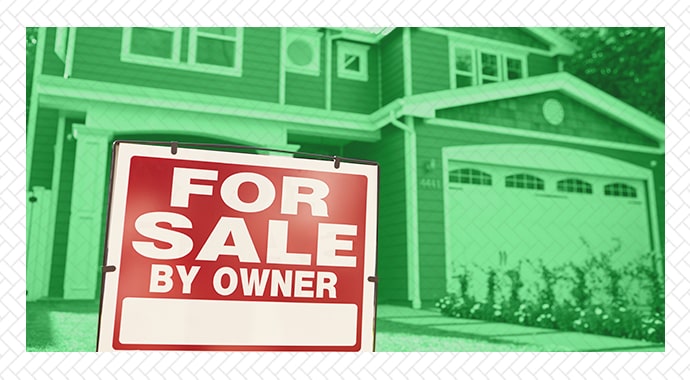
When you aren’t interested in paying a Realtor to represent you, you can go it alone as an FSBO.
A Realtor won’t be there to help you find your home value, although you can use a house value estimate tool to help you in pricing.
An agent also won’t be on call to guide you through the sales process. You will be in charge of doing research on all aspects of the listing and sale.
One of the most difficult jobs when you represent yourself is attracting buyers. There are a number of ways to do this, and some require more time and effort than others.
Ways to Market Your House Yourself
- Place a professional-looking “for sale by owner” sign or two on your property.
- Create a video of your home to post on the internet. If you don’t have that skill, you can locate a professional service to do that for you.
- Make up an advertisement for your house that lists the features that buyers might like.
- Share your listing information with the public by using the FSBO sites. Many of these are free.
Selling as an FSBO has a number of benefits.
Pros of Marketing Your House Yourself
- You’ll skip real estate commissions. These fees are the largest part of your California closing costs.
- You are in charge of all aspects of the sale. You decide when to list, how to market, and when to close the sale.
- You can devote all of your time to selling your house, as opposed to agents who have multiple clients who demand their time.
But there are also some disadvantages to going it alone in your home sale.
Cons of Marketing Your House Yourself
- You’ll need to understand real estate law and lending to help your buyers.
- You’ll need to wait for your buyer to apply and be approved for a mortgage. This includes navigating a property appraisal to ensure that it matches the contracted sales price.
- Nobody with professional knowledge and experience will have your back during the sale.
- If you make an error, it can delay your closing. If you make a major mistake, it could ruin your sale. You may end up overpaying your FSBO closing costs when you don’t have mastery of the normal fees and charges involved.
Expert Insight
What are the common pitfalls when selling a house by owner?
The biggest mistakes are incorrect pricing, limited marketing exposure, incomplete disclosures, and weak negotiation.
Many sellers focus on saving commission but underestimate the importance of pricing strategy and managing inspections, contracts, and buyer communications.
— Ty Fischer, Total So Cal Homes, Founder/Team Leader
— Michael Soon Lee, RE/MAX Gold, Broker-Associate
#4 How to Sell and Buy a House at the Same Time in California

If you’ve located a house you want to buy, but have yet to list your current home, you have an option to sell and move quickly.
Some iBuyer companies offer “buy before you sell” services where you can sell your current house and also buy a new property at the same time.
California iBuyers use the equity in your current property to lend you cash to make an offer on your new house.
In an ordinary sale, you’d need to make a contingency offer on a house and then list your current property — and hope to quickly locate a buyer who can also move rapidly to close.
Without a speedy sale of your current residence, you may lose your new home to another buyer.
With the cash from an iBuyer, you can close on your new house, and the iBuyer will then close on the sales contract on your former home.
The real estate sales process in California can vary slightly with the geographic location, but the basic steps are the same. Let’s outline those in the last segment.
Home Sales Process in California

You’ll start your California home sale by signing a listing agreement with a brokerage, if you decide to use an agent. Selling to a home cash buyer or selling as an FSBO eliminates this step.
Before Signing a Purchase Contract
All homeowners selling a property need to complete the Real Estate Transfer Disclosure Statement that categorizes the presence and condition of your home’s systems and features.
This written disclosure must be given to all prospective buyers to inform them of any material defects or risks to the health and safety associated with the property.
You can find more details about the disclosure in the article about selling a house as is in California.
Marketing the Property
You or your agent must then develop a marketing plan to sell to the general public.
Marketing might include a property sign, print and online advertisements, and regular open houses.
You won’t need to market your home to real estate investors. They have an investment plan and a formula to establish a price to offer for any house.
Your home might quickly attract a buyer, but in a slower market, your house might take months to sell.
Condition also plays an important role in how quickly your property is sold. Fixers typically take longer to sell when compared to turnkey houses.
Accepting an Offer
Buyers will use real estate agents to present the offer to you, or to your agent, if you are represented by one. Offers will be presented directly to you when listing as an FSBO or selling to an investor.
Along with the offer, all buyers will present an earnest money deposit that demonstrates an honest intent to close the sale on your property.
Once you accept the offer, you, your real estate agent, or your buyer will open escrow on your property and deposit the earnest money.
This is typically done through a neutral party licensed specifically to handle the escrow process of transferring money and supervising the legal paperwork required to close the sales transaction.
Title agencies, and even attorneys in some areas, might handle the escrow as an unlicensed service. You can check your escrow officer’s authorization at the California Department of Financial Protection and Innovation.
Buyer Due Diligence Period
Once escrow is open, your buyer will do their due diligence to inspect the property.
Buyers have the legal right to hire professional inspectors to examine the home to find any problems. Inspectors will also evaluate the issues noted on the property disclosure.
Your title agent will conduct a search to discover any liens or encumbrances on the property during this time.
When your buyer uses a mortgage to purchase, the lender will approve your buyer, conduct an appraisal on the property, and then have an underwriter make a final determination to fund the home loan at this time.
If your buyer is an investor, you’ll skip the mortgage-related steps, since they use cash to buy.
Closing
Your title or escrow officer, and in some cases, your agent or attorney (if you use these professionals), will guide you through signing the legal documents necessary to close the sale.
Once your closing paperwork has been prepared by escrow, you’ll sign the final legal documents and pay your closing costs.
FSBO sellers and homeowners using an agent pay commissions and closing costs at this time.
Property owners selling to investors will have their closing fees covered by the cash buyer.
The final, but important step, is to file the deed transferring ownership of the property with the county recorder’s office. Your title or escrow agent will handle that duty.
After Closing
Congratulations! The transaction has been completed. The only thing to do is give your buyer the keys to their new property.
Expert Insight
In a traditional real estate sale, which stage is the most complex and time-consuming for sellers and how could they make it easier?
In California, the escrow and escrow contingency period is undisputedly the most complex and time-consuming stage of a traditional real estate sale.
This is the phase where a transaction morphs from an exciting mutual agreement into a high-stakes paper-pushing marathon.
Sellers are immediately buried under an avalanche of statutory mandates, including the Transfer Disclosure Statement (TDS) and Natural Hazard Disclosures (NHD).
In this state, the law essentially requires you to legally confess to everything, from an old plumbing hiccup to a neighbor’s noisy rooster.
Navigating this compliance minefield while simultaneously haggling over buyer repair requests — which often read like a wish list for a brand-new house — can easily stretch the limits of a seller’s patience and calendar.
Sellers can drastically simplify this grueling stage by shifting their strategy from defensive to offensive.
Instead of waiting for the buyer to uncover a property’s flaws and hold the contract hostage, smart sellers should order a pre-listing home inspection and complete all disclosure paperwork before the property ever hits the market.
Presenting a fully transparent disclosure package upfront eliminates the element of surprise, narrows the buyer’s window for aggressive renegotiation, and keeps the transaction moving swiftly toward a successful close.
— Nathan Diones, Regioncy Real Estate, Broker of Record/Chief Deal Maker
Usually, there are many items that need to be addressed to make it as attractive as possible to potential buyers.
It could be as simple as new paint or carpet, but it could also be as complex as upgrading a kitchen or bathrooms.
This could require coordinating carpenters, electricians, and other professionals, along with obtaining permits.
Many sellers do not want to invest in minor improvements to make their property look as attractive as possible to potential home buyers.
I promise my sellers that for every dollar they spend, they will get three to five dollars in return at a higher price.
Over the years I’ve learned what improvements have high return on investment versus those that are a sunk cost.
The seller could make it easier by simply trusting their agent rather than fighting them on every dollar they are trying to spend on behalf of their seller.
— Michael Soon Lee, RE/MAX Gold, Broker-Associate
The sellers who have the smoothest closings are usually the ones who start preparing long before the property is listed.
Potential problems are much easier to solve before a buyer discovers them.
— Stephanie Nash, Compass, Realtor
Next Step

We’ve covered the sales process and four ways to sell your California home.
The next step is to contact investors to shop for offers, and also locate experienced real estate agents to talk about marketing plans and commission fees.
Since you’re here on the website, why not start with requesting cash offers from HouseCashin investors? There’s no fee or obligation to accept any of them!
