
4 Best Ways for Selling a Home in North Carolina
Even though the information on this web page is provided by a qualified industry expert, it should not be considered as legal, tax, financial or investment advice. Since every individual’s situation is unique, a qualified professional should be consulted before making financial decisions.
This article introduces the most common ways to sell a property in North Carolina.
We’ll outline the advantages and disadvantages of each option and then walk through the steps common to all of the sales approaches.
Let’s kick things off with the private sale.
#1 How to Sell a House in North Carolina Privately

When you think of how to sell a home in North Carolina, the private sale may not immediately come to mind, but it’s one that might be the most advantageous for your situation.
A private sale focuses on speed and convenience. This sales avenue also provides sellers with a level of privacy not available in a traditional transaction.
If you aren’t excited about strangers looking at the rooms in your house on advertisements and on videos posted on the internet, then you’ll also find the private sale attractive.
Private sales offer a rapid close with an all-cash sale. So, just who makes these offers? And how to sell your property privately? Let’s discuss it now.
What Are Home Buying Companies?
Companies that buy properties privately are investors who purchase with cash — their own or money provided through hard money loans. What does that mean?
Home buying companies and individual investors buy investment properties in North Carolina to repair and resell, to keep in hopes they’ll appreciate, or to hold for rental income.
Those buying a home for rental income may look for current rentals, or for properties that can be converted into leased homes.
North Carolina property investors are equal-opportunity buyers. They’ll buy any type of property in any condition throughout the state.
Some focus on single-family residences, other investors buy multifamily units, but most buy a mix of properties, and sometimes even vacant land.
Cash investors purchase homes in turnkey and in as-is condition. They look at the potential of the home after repairs and the business plan they’re following — to either lease, hold, or to flip and resell.
Why do they buy houses for cash or by using quick hard money loans? The answer is simple: to make their offer more attractive to you.
A cash sale offers you the benefit of selling quicker than the traditional transaction, where a buyer uses a loan from a bank or another conventional lender.
Traditional lenders require borrowers to go through all sorts of qualifying, and the sale property must undergo an appraisal to ensure the value meets or exceeds the loan amount.
And after weeks of waiting, it’s not a given that a lender will approve the buyer’s application for a loan.
Real estate investors avoid this delay and the risk that an underwriter will refuse to approve a home loan.
A cash sale is attractive to all sellers, but some find the extremely fast close helpful to assist in dealing with some life situations, including:
- selling a house before it gets foreclosed
- selling a rental property with tenants
- selling a property before bankruptcy
- selling a rundown house
- selling a house that was inherited
- selling a house with a state tax lien
- selling a hoarder house
- selling a marital property during a divorce
- selling a house for a job relocation
- selling to downsize
Cash buyers use North Carolina investor-friendly title companies for the transactions because they’re experienced in handling speedy sales that use cash.
Pros of Selling to a Home Buying Company
The benefits of selling your home to a real estate investor are significant.
- Companies that buy houses for cash without requiring a lender’s approval and without putting you through home appraisals and inspections.
- North Carolina companies that buy houses for cash can close the transaction quickly.
- Investors buy properties in as-is condition — no fixing necessary.
- You’ll skip paying Realtor commissions. That’s 5%-6% of the final sales price.
- Cash investors also typically pay the home seller’s closing costs.
Cons of Selling to a Home Buying Company
There’s a major consideration, however, when selling a house in North Carolina to a cash investor.
- Real estate cash buyers in North Carolina typically don’t pay market value for homes.
Let’s break down the reasons for that. Investors need to consider the repair costs, and they also project a potential profit. They are in business, so they must make some profit to continue to operate.
But to determine if the sale is a sound choice, balance the advantages of the cash sale with the offer that seems to be low.
Your closing costs are paid, you’re skipping the commission payments, and your out-of-pocket repair costs are nonexistent.
If you compare your net proceeds to what you’d net after paying Realtor fees and closing costs in a traditional sale, an investor’s offer may not seem so bad.
How to Find an Ethical Home Buying Company
When you want to explore offers from cash home investors, you’ll also want to do an initial prescreening to select buyers with at least three years of experience in the field.
Not all investors operate ethically or professionally, and longevity in the industry is important. Less than honest buyers don’t stay in business long.
They should also have a transparent biography that can be researched online.
Search with terms such as “sell your house for cash North Carolina” or “we buy houses in North Carolina” to locate websites of local cash investors. Look for an “About Us” page on each of them.
This page should include specific information about the cash buyer you’ll be dealing with during your transaction.
Look for professional business affiliations and for memberships in groups like the Better Business Bureau (BBB) or the North Carolina Chamber of Commerce.
The next step is to survey consumer feedback. Websites like Real Estate Bees and Yelp may have postings about your prospective investors.
Screening requires time, and finding investors to vet takes even more time.
If you don’t want to skim through snail mail investor advertising, collect information from ads, and note local billboards for investor contacts, there’s an easier way.
Simply request a cash offer from the investors partnering with our platform. We prescreen investors to select those with the professionalism and experience to close sales quickly, and those that buy with cash.
There’s no fee for the screening or referrals. You won’t pay any commissions should you decide to accept. And there’s absolutely no obligation to sell to any of the investors making an offer.
Expert Insight
What should home sellers look for when screening cash house buyers?
This is my world, so I’ll be straight with you.
There are good cash buyers in North Carolina and there are operators you should run from, and the screening is on you because this isn’t regulated the way a traditional listing is.
First, look them up and read their reviews on Google and Zillow before you let them in your door.
Hard rule: if you can’t find any reviews, any real online footprint, any record they actually exist, that’s not a maybe, that’s a no.
A legitimate company has closed deals, and closed deals leave a trail, reviews, a real website, a Google Business profile.
If they’re a guy with a cell phone and a yard sign and zero online presence, do not sell to them. One hundred percent walk away.
— Justin Turner, Turner Home Team, CEO
Another important consideration is local experience.
The market in Charlotte is not homogeneous. Dilworth, NoDa, East Charlotte, and the adjacent counties are examples of neighborhoods that exhibit distinct pricing, condition expectations, and resale demand behaviors.
A business that has made local home purchases will be aware of these distinctions. Find out how many houses they have purchased in your neighborhood and how long they have done so.
— Baxter Fricks, Cardinal House Buyers, CEO/Founder
#2 How to Sell a House in North Carolina Traditionally

Selling a property in North Carolina by using a traditional route means hiring a professional real estate agent to handle all of the sales duties.
For a fee, your agent, as a representative of a licensed brokerage firm, will list and market your property.
The agent is your personal representative in the sale, and that role involves pricing, negotiations, assisting in filling out forms, and supervising all the processes involved, including escrow, title, and the transaction closing.
Who Are Real Estate Agents?
Tar Heel State real estate agents need a license to operate.
They must work under the supervision of a licensed broker after completing courses that cover the topics involved in listing and selling properties, including law and marketing.
Some agents have specialist training and additional certifications in real estate areas like home staging, property management, and working exclusively with buyers or sellers.
Selling a house as a professional agent involves accepting the role of a fiduciary. Your agent is your legal representative and will put your interests first.
Agents are trained to create a comparative market analysis to assist in home pricing, develop a marketing plan, and serve as your fiduciary to assist in the sales and closing steps of the transaction.
Pros of Using a Real Estate Agent
- Your agent has the training, expertise, and certifications in selling a property in North Carolina.
- Realtors have access to exclusive databases to develop a sales price that is comparable to prior sales in your neighborhood.
- Your agent is your fiduciary so you can go about your normal life without the pressures of also dealing with marketing and selling your home.
Cons of Using a Real Estate Agent
- The average Realtor cost to sell a house is a major disadvantage. North Carolina fees average 5%-6% of the sales price.
- You may wait a long time for your property to sell, sometimes months, when your home is a fixer.
- Agents typically find buyers who need mortgages. This adds even more time to your sales calendar.
How to Find a Good Real Estate Agent
There are a multitude of real estate agents in your local community alone. How do you find a really good one who can help you sell your home?
Finding an ethical agent with professional skills is a process. It takes time, but it’s well worth your effort.
Your home sale is probably a significant part of your net worth, and that needs to be well-managed.
Begin your search for a real estate expert by collecting the names of professionals from the local branch of the North Carolina Association of Realtors.
They’re part of the National Association of Realtors, a trade group that promotes ethical real estate practices.
Make sure those agents and brokerages have active licenses that aren’t under any state restrictions or active investigations by using the North Carolina Real Estate Commission’s license database search tool.
Ask family and friends for their recommendations, but make sure these agents have experience selling homes in your neighborhood.
The next step is to screen your agents for public comments on internet websites such as Yelp, Real Estate Bees, and the local branch of the Better Business Bureau (BBB).
Once you have narrowed your list down, select your top three and invite those agents to do a listing presentation for your property.
Ask specifically for a marketing plan for your home before making a final decision and signing a listing contract.
The next sales approach asks you to take charge of all aspects of the real estate transaction.
Expert Insight
What should home sellers look for when screening real estate agents to hire?
Ask what it covers, what happens if you find your own buyer, and how long the agreement locks you in. I wouldn’t sign anything longer than 90 to 120 days with someone you haven’t worked with.
And go read their online reviews on Google and Zillow before you commit. Don’t just skim the star rating, actually read what past sellers say, especially the deals that didn’t go perfectly smooth.
— Justin Turner, Turner Home Team, CEO
Ask for their sold-to-list-price ratio and days-on-market on homes like yours over the last 6 to 12 months, not their total volume.
For an STR sale specifically, hire someone who can speak to the property’s revenue history, because you’re selling an income stream, not just square footage.
— Emir Dukic, Rabbu, CEO
The strongest predictor of what you’ll encounter during the transaction is typically the communication you have prior to signing an agreement.
— Baxter Fricks, Cardinal House Buyers, CEO/Founder
#3 How to Sell a House in North Carolina Without Middlemen
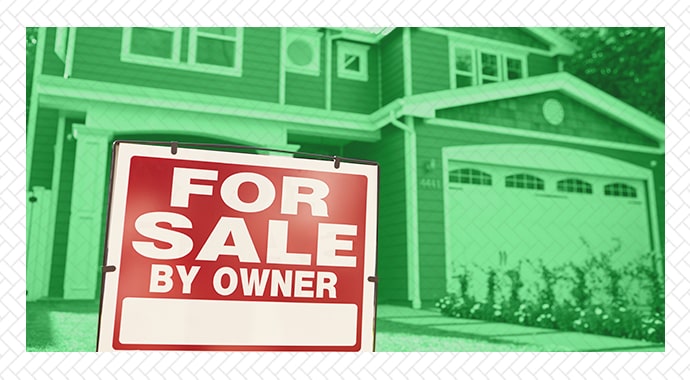
A “for sale by owner” listing is known as an FSBO. This means that you will have to market, negotiate, and close the deal yourself, without a real estate agent.
You’ll begin the process by completing your state-required disclosures. These must be given to prospective buyers before an offer is made.
You will need to complete and sign several disclosures, including the Residential Property and Owners’ Association Disclosure Statement (RPOADS) and the Mineral and Oil and Gas Rights Mandatory Disclosure Statement (MOGS).
These inventories list any damage — prior or a risk for the future — and any conditions that would reduce the value of your home or impact the safety or health of the new owners.
Once the required forms are complete, you’ll need to determine the value of your home to establish a sales price.
You may also need to study state real estate regulations, the real estate sales process, and the legal paperwork involved in the sale.
Once that’s done, you’ll need to find a buyer.
Ways to Market Your House Yourself
- Use for sale by owner websites to promote your home. Many of these are free for sellers.
- Place a sign on your property that includes a way for people to contact you for a showing.
- Film a tour of your home to be posted on websites such as YouTube or Instagram.
- Make up a promotional flyer for your home to give to potential buyers who take a tour of your property.
If you’re still unsure about the FSBO sale, consider the pros and cons to help make up your mind.
Pros of Marketing Your House Yourself
- You’ll save your North Carolina closing costs when you and your buyers don’t use real estate agents.
- You take charge of everything involved in the sale — from the time to list through the final closing date.
- Agents share their professional time with numerous clients. You have only one client — your home.
Cons of Marketing Your House Yourself
- You are responsible for meeting all North Carolina real estate laws.
- You’re also on the hook to do all the marketing and negotiations.
- You may not be prepared for problems. During the time you’re getting informed, your buyer may walk away from the sale. You may also end up in court when your buyer is extremely disgruntled.
- Closing costs when selling a home by owner are complex, and you may end up paying more for costs that could have been negotiated if you had used a professional agent.
Our last sales option is a situation that homeowners frequently confront.
Expert Insight
What are the common pitfalls when selling a house by owner?
None of those are comps. You can just as easily underprice as overprice, and underpricing quietly costs you thousands you’ll never see.
If you list at the wrong low number, you might be thrilled to get a full-price offer in two days, never realizing you left twenty grand on the table because the house was worth more than you asked.
Pull actual sold comps, recently closed homes like yours nearby, not active listings, which are just what other people are hoping to get.
Wrong price in either direction costs you, but the underprice is the one that stings later because you never even see the loss.
— Justin Turner, Turner Home Team, CEO
When the buyer’s lender discovered credit problems, appraisal flaws, or employment verification issues that weren’t immediately apparent, I’ve witnessed FSBO purchases collapse late in the process.
— Baxter Fricks, Cardinal House Buyers, CEO/Founder
#4 How to Sell and Buy a House at the Same Time in North Carolina
You’ve found a home you’d love to buy, but you need to sell your house first, and it’s not even on the market yet.
There’s an answer to this dilemma, and it includes North Carolina iBuyer companies.
North Carolina iBuyers will purchase your home, give you the cash equity immediately, and then close the transaction on your house once you’ve closed on your new property.
That process saves the delay of waiting for a buyer for your residence, and more delay while they apply for a home loan.
You’ll also avoid making a contingency offer on your new place and hoping that the owner accepts your delay. Another buyer can also ace you out while you’re waiting for your home to close.
Home Sales Process in North Carolina

You now know the answer to the question, “How to sell a home in North Carolina?” In fact, you know four distinctive ways to sell!
Let’s now review the steps involved in selling a home in the Tar Heel State.
Before Signing a Purchase Contract
You’ll begin the process by completing the required property disclosures that must be given to prospective buyers.
You can find out more about the details of these disclosures by reading “How to Sell Your Home As Is in North Carolina.”
For traditional sales, you’ll need to do decluttering, cleaning, and maybe some painting and replacements of flooring and window coverings.
There’s no need to do any of this when you sell to cash investors. They’re professionals who know they’re buying the house, not the decor or your personal items.
Marketing the Property
Once you have your property ready, it’s time to develop a marketing plan and carry that out. You may hold open houses or use traditional or online advertising during this step.
But when you are selling to cash investors, you don’t need any special marketing — a request for an offer is the only thing they require.
Accepting an Offer
You, or your agent when you use one, will field offers. This may involve multiple buyers and even counter offers when you don’t want to accept an initial contract.
Your buyer will submit earnest money to be deposited should you accept their offer.
Escrow is an independent third party that handles the paperwork and money involved in the transaction. Your sale moves into the escrow process once you accept an offer.
Buyer Due Diligence Period
The due diligence period entails creating the official paperwork for the sale, searching the legal title records, and purchasing several types of homeowner’s insurance.
It’s also the time to allow your buyer to bring in professional inspectors to examine the property. Your buyer, when not using cash, shops and qualifies for home mortgages during this time.
Investors don’t require the professional inspections or the time delay for a home mortgage.
At least three days before the final signatures required for the closing, you’ll be called in to review the transaction closing costs.
You’ll be responsible for your closing costs and commissions on your sale, unless you’re selling to an investor. FSBO sellers will skip commissions, but will still need to pay their closing costs.
Your buyer does a formal walkthrough of the home before the final signings.
Closing
North Carolina law requires a real estate attorney to supervise the formal closing. If you don’t have one, your agent, escrow, or title officers can recommend several for you to vet and hire to do that job.
The final step requires your attorney to supervise the signatures and examine the paperwork to ensure that everything follows state real estate laws.
The house keys are then turned over to the new owner, and the deed is filed with the County Register of Deeds.
You’ve then completed all the steps to sell your home!
Expert Insight
In a traditional real estate sale, which stage is the most complex and time-consuming for sellers and how could they make it easier?
North Carolina is different from a lot of states here, and it trips sellers up.
We use a due diligence model where the buyer pays you a due diligence fee, and in exchange, they get a window of time to do whatever they want, inspections, appraisal, financing, title work, surveys.
And during that window, they can walk away for literally any reason and get their earnest money back.
The only thing they lose is that due diligence fee. So from the moment you accept an offer until that due diligence deadline passes, your deal is not safe. That stretch is where the real work and the real stress live.
Here’s why it eats up so much time and energy: everything happens at once and most of it is outside your control.
The buyer’s running their inspection, while their lender is ordering the appraisal while the closing attorney is running title.
Any one of those can blow up the deal or trigger a renegotiation. The inspection comes back with a repair list and now you’re negotiating credits and fixes.
The appraisal can come in low and now you’re staring down a price drop or a dead deal.
The title search can turn up an old lien, a boundary issue, an unresolved estate, an access easement, something you didn’t even know existed on a house you’ve owned for years.
And all of this is running on a clock, because once that due diligence date hits, the dynamic flips entirely in your favor, but until then you’re exposed.
— Justin Turner, Turner Home Team, CEO
The seller may have to renegotiate the price or run the danger of the contract collapsing completely if the appraisal is lower than anticipated.
— Baxter Fricks, Cardinal House Buyers, CEO/Founder
Most sellers underestimate the pre-listing work. Cleaning, minor repairs, professional photos, preparing marketing materials. The seller can make it easier by working with a realtor.
— John Swann, John Buys Your House, Owner
Next Step
You now know the common methods to sell a house in North Carolina, and the steps involved in the sales process.
Your next steps involve locating and screening agents, iBuyers, and investors to collect and compare offers from them.
One thing you can do right now is requesting offers from cash investors.
We have a national platform of professional investors with a long history of closed sales who are interested in making a cash offer on your property.
Complete a simple online form to request cash offers from our partnering investors, and then review your offers. Simple, quick, and free.
There’s never a commission or fee. And you’re never under any obligation to sell!
