
4 Best Ways for Selling a Home in New Jersey
Even though the information on this web page is provided by a qualified industry expert, it should not be considered as legal, tax, financial or investment advice. Since every individual’s situation is unique, a qualified professional should be consulted before making financial decisions.
Homeowners in the Garden State have four typical ways to sell their property. We’ll cover how to sell a home in New Jersey by using those methods, along with the advantages and disadvantages of each option.
We’ll wrap up this exploration of selling a home in New Jersey with a quick summary of the steps involved in all of the sales approaches.
Let’s begin our tour of property sales with the all-cash private transaction.
#1 How to Sell a House in New Jersey Privately

Homeowners looking to sell a property in New Jersey quickly and for cash find the private sale extremely appealing.
Private sales avoid the long delay involved when your buyer needs to obtain a mortgage to purchase your home. They also protect the personal privacy of you and your family.
Private sales employ cash, so there’s no wait for a mortgage lender approval. You won’t have to sweat an appraisal price or the risk your buyer won’t qualify for the final loan underwriting.
You’ll also avoid the general public tours of your property. You don’t need open houses or the constant stream of potential buyers walking through your home looking at all your personal items.
When you sell a property in New Jersey in a private sale, you’ll have an all-cash transaction that moves quickly while you retain your privacy.
So, where do sellers find buyers who will enter into a private sale? Let’s explore that question in the next segment of this article.
What Are Home Buying Companies?
The simple answer is, home buyer companies are investors. They may be a solo buyer or a group of investors. The thing they all have in common is they have cash that makes the transaction move quickly.
Some property investors in New Jersey focus on purchasing rental property that they retain as a source of regular income, while others buy investment property in New Jersey to remodel and resell.
Investors buy a range of single-family houses through four-unit properties. They purchase manufactured homes, attached-residences like condos and townhomes, farm houses, and even vacant land.
Cash home buyers aren’t focused on finding turnkey properties. They expect to do some remodeling and repairs on the houses they acquire.
Some investors, in fact, concentrate their buying efforts on purchasing properties that need significant fixing and rehabbing.
Homeowners may find a quick, all-cash sale to an investor a particularly attractive alternative to a traditional real estate sale, including people:
- selling a house to avoid foreclosure
- selling a property with a tenant
- selling a house before bankruptcy
- selling a rundown house
- property owners inheriting a house and selling it
- selling a house with a tax lien
- selling a hoarder house
- selling a property to downsize to a smaller home
- selling a marital property before divorce
- selling a house for a job relocation
- who are unsure what to do when selling a property privately
Cash house buyers typically use New Jersey investor-friendly title companies to handle investment transactions due to the experience these firms have in working with cash sales.
Pros of Selling to a Home Buying Company
When you sell your house to an investor, you get significant advantages:
- Cash home buying companies can move quickly to close the transaction.
- When you sell your New Jersey house for cash, you’ll avoid the risk of getting a buyer failing to qualify for a loan. You also won’t need to sweat that an appraisal may not match your sales price.
- You’ll skip having to do any pre-sale preparations.
- Investors don’t take a commission on the sale. If you forego using a Realtor, the sale won’t have any commission fees.
- Cash home buyers typically pay seller closing costs.
Cons of Selling to a Home Buying Company
There’s one possible downside in selling to an investor.
- Real estate cash buyers in New Jersey typically don’t pay market value for homes.
There’s a reason for that: home buyers are businesses, and they do need to make some profit.
But, when sellers look at the money they walk away with after the sale, the cash home buyer’s offer seems not that bad compared to the net proceeds from a sale involving a Realtor and their fees.
How to Find an Ethical Home Buying Company
Just like any field or industry, not all investors are ethical. Doing just a bit of research will help you locate professional and honest investors.
Start your research by collecting names of home buying companies. You can find those by using postal mailings, media advertising, local billboards, and an online search.
Use search terms such as “buy houses for cash” and “we buy homes.” Be sure to include your town in the search to find local investors.
The next step is to review consumer feedback for the investors on your list of prospects. Yelp and Real Estate Bees are good places to locate that information.
You can take one more step to verify the professionalism of your prospects by checking the State of New Jersey Department of Banking and Insurance website.
If you’d like to avoid all the legwork on your part, you can use our website.
Complete a simple online form, and you’ll receive estimates from local professionals that we’ve prescreened for their experience, expertise, and ability to close quickly in all-cash sales.
Request a cash offer from the investors partnering with us to connect with vetted cash home buyers. You won’t pay any fees. And there’s absolutely no obligation to sell to any of the cash buyers.
Expert Insight
What should home sellers look for when screening cash house buyers?
New Jersey is a very competitive market when it comes to real estate investors, so homeowners will usually have plenty of “we buy houses” companies to choose from.
The challenge is figuring out which companies are actually credible and capable of following through on the purchase.
The reality is that many companies in this space are wholesalers. That means they may put the property under contract and then assign that contract to another investor who will actually purchase and renovate the home.
There is nothing necessarily wrong with that, as long as the company is transparent about what it does.
However, homeowners should understand whether they are working with the actual buyer or with someone who still needs to find another buyer before the property can close.
— Jonathan Faccone, Halo Homebuyers, Founder
Search for proof of a local history. Every county in New Jersey has unique common title concerns, municipal laws, property tax considerations, and market dynamics.
In general, a business that has successfully acquired properties in Camden, Gloucester, Cumberland, Salem, Atlantic, or Cape May County will be better prepared to deal with any difficulties that may come up during the acquisition.
Find out how long they have been doing business locally and how many houses they have bought in your region.
Another crucial screening technique is reviews, but don’t rely solely on the star rating. Go over the comments themselves.
Seek out homeowners who can tell you about their experience from the first contact to the closing.
— Dylan Burnett, Northbound Home Buyers, Founder
#2 How to Sell a House in New Jersey Traditionally

The next listing option is the traditional sale that is assisted by a real estate agent.
Who Are Real Estate Agents?
The Garden State licensed agents and their supervising brokerages to ensure training and expertise in representing buyers and sellers in real estate transactions.
Agents handle everything for you, including listing, marketing, negotiating, guiding the sale through escrow and title, and supervising the closing process.
Agents who call themselves Realtors are members of the state branch of the National Association of Realtors (NAR). Members take an oath of ethics to act professionally as your fiduciary during the sale.
Weighing the pros and cons of a brokerage sale can help you in making the decision to hire a Realtor.
Pros of Using a Real Estate Agent
- The access to real estate expertise is the major advantage of selling a property in New Jersey by using a real estate brokerage.
- Realtors have access to proprietary databases to assist you in setting a price for your home.
- Your agent is your fiduciary and can handle all aspects of the sale to free you to go about your normal work and life.
Cons of Using a Real Estate Agent
- The average Realtor cost to sell a home is the highest of the closing costs when selling a house in New Jersey.
- You typically won’t sell your home immediately, so you’ll have home showings and open houses throughout this time.
- Buyers from the general public typically need home mortgages. That means you’ll wait for your buyer to apply and qualify for a loan. This can add weeks, sometimes months, to closing the transaction.
How to Find a Good Real Estate Agent
A professional Realtor with the expertise and experience in selling homes in your area is the most important element to a successful transaction.
Locating that agent takes a bit of patience and a lot of research.
Ask your friends, family, coworkers, and neighbors for recommendations. Search through the agent lists on Realtors on the New Jersey Association of Realtors local board website to add prospects to your list.
Check the state Department of Banking and Insurance website to see if any of your agent prospects are noted in the real estate commission disciplinary actions.
The next step is to check the consumer climate about the agents on your list. Skim websites, including Yelp and Real Estate Bees, for comments and complaints.
The last step is to set appointments for three agents to come to your property to present a listing pitch. Ask them to develop and present a specialized marketing plan for your property at that meeting.
Select the best prospect and sign a brokerage agreement with that real estate agent.
The next listing method requires the homeowner to assume all the duties that a real estate agent would handle in a traditional sale.
Expert Insight
What should home sellers look for when screening real estate agents to hire?
I would also make sure the agent is locally based or, at the very least, has a strong understanding of the local market.
The best agents know more than just recent comparable sales.
They understand the neighborhoods, school systems, property taxes, local development, flood zones, wetlands, Pinelands restrictions, septic systems, and other factors that can affect a home’s value or how easy it may be to sell.
— Jonathan Faccone, Halo Homebuyers, Founder
Although many agents guarantee exposure, sellers should make certain inquiries: Will there be usage of professional photography? Does the budget for digital advertising exist? How will the property be advertised outside of the MLS? If no offers are received for the house during the first few weeks, how will they proceed?
— Dylan Burnett, Northbound Home Buyers, Founder
If they run a team, who will be working for them, meaning will you see the same agent from start to finish? Also, ask for a couple of recent sellers to use for references.
Is the agent truly listening to what you are saying and what your needs are, or are they simply talking at you?
— Mark Slade, The Mark Slade Homes Team at Keller Williams Mid-Town Direct Realty, CEO
#3 How to Sell a House in New Jersey Without Middlemen
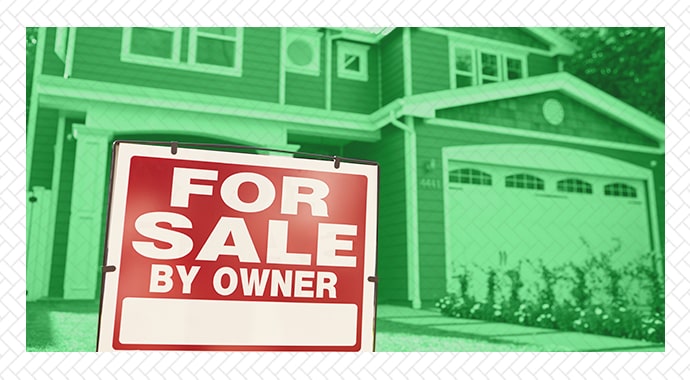
A “for sale by owner” home listing is known as an FSBO. This listing method puts the seller in the driver’s seat for all aspects of the sales process.
Since you’ll be selling to the general public, you’ll need to make your home as close to turnkey condition as possible. Home buyers as a rule look for move-in ready homes.
They’re not excited about fixer listings that offer homes as is.
FSBO listers have two other duties before opening their home to the general public. The first is to determine the current home value to assist in setting a sales price.
The second is to complete the state-mandated disclosures. The seller’s property condition disclosure statement requires the homeowner to be transparent about any material damages present in the house.
The disclosure also requires owners to list any health or safety risks.
Before putting a “for sale” sign on the property, you’ll need to review federal, state, and local real estate restrictions and regulations to ensure you’re following the laws during your sale.
One of the most challenging duties for an FSBO seller is to interest potential buyers in your property.
Ways to Market Your House Yourself
- Signs are a standard method to advertise your home for sale. They’re most effective in places where you have a significant amount of traffic.
- Video tours of your property are eye candy for potential buyers that are tech-savvy. YouTube and Instagram are free to post your tours.
- Informational flyers to distribute to home buyers when they tour your house help focus them on your home’s amenities and features.
- The best FSBO websites are another place that offers homeowners a free resource to advertise a property sale.
Pros of Marketing Your House Yourself
- You won’t pay any commissions on your side of the transaction. These fees are the greatest line item for your closing costs in New Jersey.
- You have total control over every aspect of your sale from the time you list through setting the calendar for the closing.
- Your house is your only focus, unlike agents who have a number of clients.
Cons of Marketing Your House Yourself
- You may not be aware of all the real estate laws and regulations sellers must meet in marketing a home. This can be overwhelming for homeowners who don’t have that expertise.
- You won’t have anyone to assist you in the sale. You’re on your own to list, market, and guide your home to the final closing.
- Mistakes mean delay, and if you make a major error, you may end up in court.
- Some FSBO closing costs are negotiable. Unless you understand the nuances of negotiations, you may end up with less profit than you would have earned by using a Realtor.
Expert Insight
What are the common pitfalls when selling a house by owner?
You have to price the home correctly, prepare it for showings, market it, respond to inquiries, screen buyers, negotiate the contract, and manage the transaction through closing.
One of the biggest pitfalls is pricing the home based on emotion or an online estimate rather than the actual local market.
If it is priced too high, it may sit. If it is priced too low, the homeowner may leave money on the table.
Exposure can also be a challenge because many qualified buyers work with agents.
Homeowners should also be prepared to receive calls from agents whose main goal may be to obtain the listing rather than bring an actual buyer.
— Jonathan Faccone, Halo Homebuyers, Founder
If not appropriately reported, problems with roofs, water intrusion, mold, structural issues, septic systems, wells, environmental problems, or prior insurance claims can lead to serious legal troubles.
Due to their ignorance of disclosure requirements, many FSBO sellers inadvertently subject themselves to responsibility.
Additionally, I have witnessed sellers undervalue the intricacy of title and legal matters.
Inheritance, probate, tax liens, judgments, open permits, municipal infractions, boundary disputes, and unresolved ownership issues are common issues with South Jersey properties.
These problems frequently go unnoticed until a title search is carried out, which can lead to delays or the complete collapse of transactions.
— Dylan Burnett, Northbound Home Buyers, Founder
#4 How to Sell and Buy a House at the Same Time in New Jersey
You’ve found the house of your dreams, but there are other home shoppers who are also interested in the property.
You have another snag to the new purchase — you currently own a house that needs to be sold before you can buy.
There are several ways to approach this situation. You can offer the buyers a sales contract contingent on selling your property. That might not happen, or at least not happen quickly.
Buyers generally don’t view contingency sales favorably. A contingency sale also doesn’t guarantee that you’ll end up with the house. Other buyers can steal the home away from you if they can close immediately.
You do have one more sales option, and that’s selling to New Jersey iBuyers.
iBuyers will purchase your home for cash so you can take the cash equity in your current home to use to buy your new property.
Once your transaction is complete, the iBuyer will close the transaction on your current home.
Home Sales Process in New Jersey

We’ve now completed our overview of how to sell a house in New Jersey. The next segment details the steps sellers take in using any of the four sales approaches.
Before Signing a Purchase Contract
The amount of time, effort, and cash investment required to sell your home depends on the sales method you select.
Your home may need new landscaping, paint, or flooring. You might need to declutter or deep clean.
If you’re selling to the general public who look for turnkey homes, you’ll need to do basic repairs and cleaning at the very least.
You may want to stage your home for the public to make it look like the homes they see featured in the media.
Homeowners selling to investors won’t need to do anything except contact the cash home buyers. They purchase properties as is, and they aren’t influenced by cosmetic damage or staging.
You’ll need to complete a state home property disclosure and a federal lead paint reporting with any of the sales methods you select. Those are required by law.
If you want to discover more information about the state disclosures, our article on how you can sell a home as is in New Jersey provides more details.
Marketing the Property
Marketing your property is the next major step in selling your home. Your marketing plan also depends on the sales method you elect to use.
You’ll need to post a sign on your property, advertise, hold broker previews and open houses, and also open your home to the general public for showings.
Sales to investors don’t require sellers to take any of those steps. Homeowners simply need to ask for an offer from investors.
Accepting an Offer
Offers will be presented directly to sellers when homeowners use the FSBO method or sell to an investor. And when you list your home with a brokerage, your real estate agent will handle all offers.
An offer will be accompanied by an earnest money deposit that will go into an escrow account.
While a real estate attorney isn’t required in a home sale, you or your buyer may choose to consult one during this period in the transaction.
Buyer Due Diligence Period
The due diligence period is the most labor-intensive for your buyers and the title and settlement agents.
Your seller may hire home inspectors to examine your home during this time.
This may trigger a renegotiation of the sales contract when inspectors find things that aren’t listed on the property disclosure form.
A title search will be done, and your buyer will take out property hazard insurance and title insurance policies.
Three days prior to the final closing, your settlement agent will sit down with you to review the closing documents.
You’ll see fees for commissions and closing costs when selling through an agent or as an FSBO listing on this accounting form. You won’t see either charge when selling to an investor.
Your buyer has the legal right to do a final walk through the property to ensure the home is in the same condition as it was when the sales contract was written.
Closing
The closing process is the time for both buyer and seller to sign the final paperwork. You’ll also turn over your keys to the new buyer.
Your settlement officer will arrange for payment of transfer fees and the new property deed to be filed with the county clerk.
Expert Insight
In a traditional real estate sale, which stage is the most complex and time-consuming for sellers and how could they make it easier?
Many homeowners think that finding a buyer is the most difficult aspect, but in my more than ten years of purchasing properties around South Jersey, the majority of delays, renegotiations, and unsuccessful transactions happen during the contract-to-closing stage.
The sale goes through a protracted due diligence procedure once a contract is signed, which frequently entails attorney review, inspections, appraisals, title work, mortgage underwriting, municipal requirements, and talks over repairs or credits.
Every step makes it possible for unforeseen problems to arise.
The first significant obstacle is frequently home inspections. Another frequent cause of delays in New Jersey is title concerns.
Old debts, judgments, estate issues, probate matters, outstanding permits, boundary conflicts, unreleased mortgages, and ownership inconsistencies have all complicated deals in my experience.
Until the title company starts its investigation, many sellers are totally ignorant of these issues.
— Dylan Burnett, Northbound Home Buyers, Founder
Before accepting an offer, I think it is helpful for the seller or listing agent to speak directly with the buyer’s mortgage professional.
They should confirm whether the buyer is fully preapproved or only prequalified, what type of financing they are using, and whether the proposed mortgage commitment and closing dates are realistic.
— Jonathan Faccone, Halo Homebuyers, Founder
Next Step
The next step is up to you. It’s now time to start collecting the names of real estate agents, iBuyers, and investors to be vetted.
We’ve vetted the investors who partner with us for their professionalism and expertise.
We look at their experience in buying properties for cash and their track record on closing transactions.
You can request cash offers by filling out a short form on our website. We’ll match you with cash investors in your area who are interested in buying a home just like yours.
There’s absolutely no cost to you for the request or any of the offers. There’s also no commission to you, and your buyer will pick up your closing costs.
