
4 Best Ways for Selling a Home in Indiana
Even though the information on this web page is provided by a qualified industry expert, it should not be considered as legal, tax, financial or investment advice. Since every individual’s situation is unique, a qualified professional should be consulted before making financial decisions.
Hoosier homeowners selling a property in Indiana typically use four methods. We’ll cover those sales approaches in this article and explore some pros and cons for each one.
We’ll also detail the steps involved in selling a house in Indiana, from the listing through the final signatures required to close the transaction.
Let’s begin our tour of how to sell a home in Indiana by exploring the private home sale.
#1 How to Sell a House in Indiana Privately

Homeowners looking for a quick transaction in an all-cash sale might find the private sale the perfect answer for their needs.
Private sales are cash transactions. That means the seller won’t need to wait while the buyer searches for a loan and then must jump through all the hoops to qualify and have the mortgage funded.
Private sales won’t require sellers to sweat the closing if buyers fail to qualify for a mortgage, or the property appraisal value fails to match the contracted sale price.
Private sales also have the advantage of privacy. You won’t have looky-loos calling at all hours for you to show your home.
You’ll also skip holding open houses where the general public tours your kitchen cupboards and bedroom closets.
Private home transactions are speedy cash sales that avoid all the downsides of other real estate sales methods.
Who buys privately and where can you locate these buyers? Our next segment answers those questions.
What Are Home Buying Companies?
Home buying companies are solo cash buyers, groups of professional investors, and even investment organizations like hedge funds.
The common link between all of these investors is they have cash to buy your home and they can close quickly, sometimes in only a matter of days when necessary.
Property investors in Indiana purchase a variety of real estate types, from single-family and attached residential units to commercial property.
They buy investment property in Indiana that can be repaired or remodeled and then sold to other buyers.
Some professional cash buyers focus on purchasing rental property that they’ll retain for a steady stream of lease income.
Investors look for homes in any condition. They’ll buy turnkey properties that are move-in ready and houses that are filled with materials from decades of hoarding — and everything in between those extremes.
Cash home buyers offer a quick sale for homeowners:
- selling a house before it gets foreclosed
- selling a home with renters
- selling a house during bankruptcy
- selling a house in disrepair
- selling a house as part of an estate
- selling a house with a state tax lien
- selling a hoarder house
- selling a house to downsize to a smaller home
- selling a home in a divorce situation
- selling a house for a job relocation
- selling a property privately
Indiana investor-friendly title companies have the expertise and experience to close cash sales quickly. Cash investors typically use these local firms for transactions.
It helps to weigh both the pros and cons of selling your home to an investor as part of your search for the best way to sell your property.
Pros of Selling to a Home Buying Company
- Fast cash house buyers can close your sales transaction quickly. There’s no delay to apply for a loan or wait for a lender’s approval.
- Cash house buyers in Indiana eliminate the risk that your buyer won’t qualify for a loan. You also don’t need to worry that a lender won’t fund a loan on your property because it doesn’t match with a property appraisal.
- There’s no home prep involved in a sale to a cash investor. Investors buy homes as is.
- Investors don’t charge a commission, and when you forego using a Realtor, you’ll save both sides of the sales commission. That’s approximately 6% of the sale price in the Hoosier State.
- Your seller closing cost percentage will be far lower when you sell to a cash home buyer. You’ll skip commissions when you don’t use a Realtor, and also your closing costs. Investors typically pick up the tab for your closing costs, in addition to paying their own fees.
Cons of Selling to a Home Buying Company
- Indiana cash property buyers generally don’t offer prices that match with the local market value.
There’s a reason for that. Home buyers are businesses, and they need to make some profit.
But before you discount an investor’s offer, it’s helpful to look at the big picture of the actual cash you’ll pocket at the end of the sale.
Investors typically pay your closing costs, and you won’t pay agent commissions.
What the investor offers you is basically what you walk away with, unlike the sales offer a Realtor will bring that requires you to deduct both closing costs and the commission fees.
When you look at the cash to you in both scenarios, you may find the investor’s offer compares favorably with a Realtor-assisted sale.
Now that you know how selling your house to an investor works, let’s explore some ways to find an ethical professional.
How to Find an Ethical Home Buying Company
Not all cash investors are honest dealers. Just like any profession or trade, there are good and bad actors.
One way to sort the ethical ones from the others is to research the prospects and vet them to determine which company has a legitimate record of professionalism and a history of closing cash sales quickly and honestly.
Start your search for investors by using the internet. Use “we buy homes in Indiana” or similar terms to bring up a list of investor websites.
Look for a tab on the websites that provides biographical and professional information about the prospect. That’s typically found under the “About Us” or “Our Company” tab.
If there isn’t any information for the investor on the website, move onto the next prospect. Legitimate investors are transparent about those details.
Research by using online local consumer feedback websites to see what former clients are saying about the company or individual investor.
If the home buying company resells the properties they’ve rehabbed and flipped in the state, confirm the permits they acquired for that remodeling were carried out to the letter of the law. The county or local municipalities can assist with that information.
The regional branch of the United States Attorney’s Office can also address any concerns you may have about potential investors.
But there is an easier way to get in touch with reputable investors. We prescreen all of the professionals partnering with us for their experience and expertise.
Request a cash offer by using the simple form available on our website. We’ll connect you with seasoned investors who have experience buying homes in your specific area.
The next stop on our tour of ways to sell your Hoosier house is the traditional sale.
#2 How to Sell a House in Indiana Traditionally

When you sell a property in Indiana by using a real estate brokerage, your agent takes charge of all the duties involved in the listing and sale.
Who Are Real Estate Agents?
Hoosier agents are licensed by the state after study and exams requiring knowledge of state property laws, legal contracts, and the process of listing and selling real estate.
Your agent will handle the marketing, they’ll negotiate offers on your behalf, and they’ll guide you through the escrow and closing steps in the transaction.
The agent you work with is your legal fiduciary. They can handle all of the details of the listing and sales transaction for you.
An agent using the title of “Realtor” is a member of the Indiana Association of Realtors. They take an oath to uphold the highest standard of business ethics.
You’ll need to balance the cost of hiring an agent with the advantages they’ll bring to the sale.
Pros of Using a Real Estate Agent
- Agents have mastery of the tools used when selling a property in Indiana.
- Realtors have proprietary resources to assist you in setting a price that will attract buyers. Agents can assemble a property assessment by using prior sales of similar homes in your neighborhood.
- Your agent is your personal fiduciary. They can act on your behalf so you can go about your regular schedule of work and life.
Cons of Using a Real Estate Agent
- The average Realtor costs to sell a home in Indiana is a major downside for home sellers. You’ll pay an average of between 5%-5.5% of the sales price to use a Realtor when selling a house in Indiana.
- Your home probably won’t sell right away, so your agent will need to continue to market and show your house until a buyer is found.
- Agents represent the general public, and those potential buyers typically require mortgages. Loans add weeks, sometimes months, to your closing calendar.
How to Find a Good Real Estate Agent
A good real estate agent recommendation might be as close as your neighbors, family, or friends. Ask them for the names of local Realtors that they’ve worked with.
Add agent names to your list from a quick search by using the Indiana Association of Realtors’ lookup feature on the association’s website.
Once you have a few prospects, confirm they have an active license and are categorized as “good standing” with the state licensing agency.
Check the consumer feedback on your list of agents by skimming local review sites such as Yelp or Real Estate Bees. Discard the names of agents with a number of negative reviews.
The local branch of the Better Business Bureau (BBB) hears consumer complaints against agents. Check there to see if any of your prospects are involved in any disputes.
The most important vetting step is to invite at least three agents to your house to do a formal listing presentation.
Ask the agents to develop a specific marketing plan for your home as part of their sales pitch. When you find an agent that meets your needs, sign a listing agreement with that Realtor.
Our next sales method is one where the seller takes charge of the residential listing.
#3 How to Sell a House in Indiana Without Middlemen
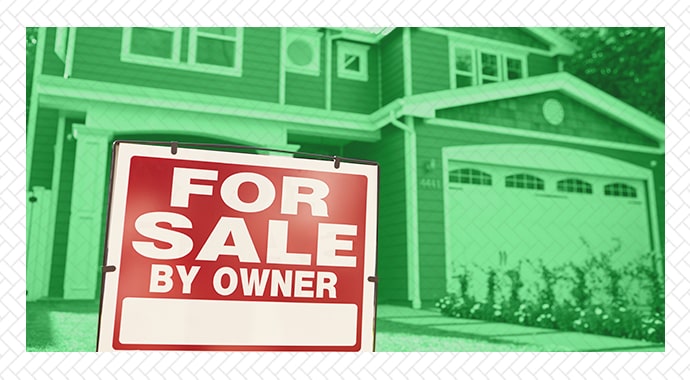
A “for sale by owner” listing, also known as an FSBO, puts the owner as the point person for the entire sale.
You’ll be expected to prepare your home for the sale, complete the required disclosures, develop a marketing plan, and then guide the sale through the escrow and closing processes.
The key duties for the FSBO seller is to complete the required legal disclosures and then set a sales price.
An online calculator is a free and easy way to determine the fair market value of a home.
Ways to Market Your House Yourself
Maybe the most challenging aspect of an FSBO sale is locating prospective buyers. Here is how to do it.
- A sign on your property can be an effective advertisement when your home is located on a busy route. It should feature several ways prospective buyers can contact you for a home showing.
- Video tours are a good way to put eyes on your property. Post these online at places like YouTube and Instagram for the highest visibility.
- Professional-looking flyers that can be distributed to potential buyers are another effective marketing tool.
- Post advertisements online by using the best FSBO websites to expand your marketing reach to areas outside your neighborhood.
Pros of Marketing Your House Yourself
- While real estate commissions are negotiable, sellers are still on the hook to pay Realtor fees as part of the closing costs in Indiana. You’ll avoid your side of the commissions when you sell by yourself.
- You are in charge of all aspects of the listing and sale. You set the calendar for everything.
- You can spend all of your time marketing your home, as opposed to real estate agents who must work with multiple clients during the week.
Cons of Marketing Your House Yourself
- The legal requirements are a challenge for many FSBO homeowners. You may violate the law without even knowing it.
- You work alone, without any professional guidance.
- You might miss out on potential buyers or have some walk away due to your inexperience. Your sales price also might not reach market value due to your lack of expertise.
- Some FSBO closing costs can be negotiated, and you may miss out on these if you don’t know the basics of handling the details of the transaction.
The last stop on the home sales tour is a method that has the seller buy and sell in one transaction.
#4 How to Sell and Buy a House at the Same Time in Indiana
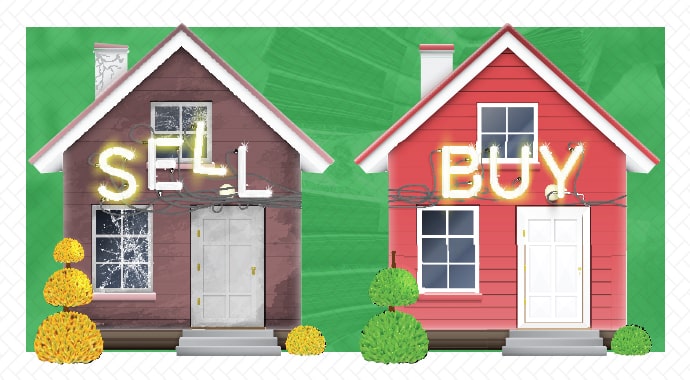
This sales approach has the homeowner buy a house by using the cash equity from their current property after a sale to an Indiana iBuyer.
The homeowner completes the sale on the new property, and once that sale has been finalized, the iBuyer then closes on the homeowner’s former house.
There are several advantages to the homeowner in this sales method.
You can lock up a property you really want without having to risk someone else buying the home while you’re waiting for their current property to sell.
This method also eliminates the need for the homeowner to make a contingency offer that asks the owners of the new property to wait for a sale to close.
Most sellers aren’t excited to receive contingency offers. Also, this sale moves quickly because it’s facilitated with cash from the iBuyer.
Home Sales Process in Indiana

Those are the four major sales approaches in the Hoosier State. Our last segment tracks the steps of the actual sale in Indiana.
Before Signing a Purchase Contract
Your home preparations will vary with the type of sales method you chose, but you may be upgrading, repairing, or decluttering before you open your home to the general public.
Sales to investors don’t require any specific prep. Simply contact investors for an offer.
Sellers are required by law to complete an Indiana Seller’s Residential Real Estate Sales Disclosure. That document must be shared with all prospective buyers.
The disclosure asks homeowners to be transparent about any material defects that could reduce the value of the home and any health or safety risks associated with the property.
For more specific details about the Hoosier disclosures, consult our article “Why Sell an Indiana Home As Is.”
Marketing the Property
Your marketing approach depends on the sales method you select. You’ll need a comprehensive marketing plan when working as an FSBO or using an agent.
That plan might include signage, print, and online advertising, as well as broker previews and open houses.
Selling to an investor, however, does not require any marketing. Simply request an offer and you’re set.
Accepting an Offer
When selling as an FSBO or to an investor, the offers will be presented to you directly. Your real estate agent, however, handles any offers when working with a real estate brokerage.
All offers will be accompanied by an earnest money deposit. This will be deposited into an escrow account when you accept the offer.
Buyer Due Diligence Period
The due diligence period requires the buyer to contract for a title report, order hazard insurance, hire home inspectors, and arrange for a home loan when they aren’t paying cash for the property.
The escrow officer will create and organize the paperwork necessary to complete the transaction.
At least three days before signing the final paperwork, your officer will review the closing costs with you. That meeting is required by federal law.
When selling as an FSBO and when you use a real estate agent, you’ll note that your charges will include closing costs or commissions for the brokerage.
Your closing fees when selling to an investor won’t include either commissions or closing fees. Your buyer has the right to walk through the property for a review before the final closing.
Closing
The final step is collecting the signatures on the official paperwork, presenting the home keys to the new owner, and filing the new deed of ownership.
The escrow or title officer will then file that deed of transfer with the county recorder’s office.
Next Step

It’s now time for you to do some preliminary research to determine the sales method that best meets your needs. We can assist with assembling a list of investors in your area.
Our partnering cash home buyers have been vetted for their professionalism, expertise, and their ability to close cash sales quickly.
While you’re here reading this article, why not request cash offers from our investors right now?
There are never any fees or commissions for you to pay, and you’re never under any obligation to accept any offer from our investors.
