
4 Best Ways for Selling a Home in Florida
Even though the information on this web page is provided by a qualified industry expert, it should not be considered as legal, tax, financial or investment advice. Since every individual’s situation is unique, a qualified professional should be consulted before making financial decisions.
There are a number of options for selling a property in Florida, and this article details each method.
We’ll outline the residential sales process and the advantages and disadvantages of the different approaches to selling a property in Florida.
Let’s begin with the private sale.
#1 How to Sell a House in Florida Privately

When selling a home in Florida privately, you won’t need to ready your house for public display and won’t have to advertise it to find a buyer.
There’s no need to rearrange or remove furniture to make rooms look bigger. You also won’t waste money and time on repairing your house if it’s in bad condition.
With a private sale, you won’t have to open your house to strangers. You’ll feel safer knowing images of your home’s interior aren’t featured for public scrutiny on the internet.
These are just a few of the benefits when selling a house privately in the Sunshine State.
How do you sell a property in Florida privately? Before we get into the details, let’s introduce the people who do private home buying as a profession.
What Are Home Buying Companies?
Selling your home to an investor in a private sale to a professional real estate buyer is one option for homeowners.
These all-cash buyers might operate as a collective firm, or they may be an individual who buys as the sole investor. Hedge funds also purchase properties as investments.
Real estate investors in Florida purchase all types of homes in as-is condition. Then, investors will rehab, remodel, or repair houses to resell them to other buyers.
Cash real estate buyers also have interest in buying a rental property to hold as a source of regular income.
They buy investment properties in Florida in turnkey condition or as a fixer and then convert those homes into rentals.
Cash investors mostly assist homeowners who need to sell a property urgently, or who can’t or don’t want to put extra effort into marketing, negotiations, and other inconveniences of a traditional sale.
They often serve people who are:
- selling a house before it goes into foreclosure
- selling a house with tenants in it
- selling a house after a bankruptcy discharge
- selling a house in bad condition
- selling a home during divorce
- selling house for job relocation
- selling a house with unpaid property taxes
- selling a home to downsize
- selling a house in an estate
Investors typically work with local investor-friendly title companies in Florida. These firms have experience processing cash sales quickly.
Selling a house privately to an investor has a number of advantages not typically offered through sales to the general public.
Pros of Selling to a Home Buying Company
- Using a company that buys houses means a fast sale.
- You won’t need to wait for your buyer’s loan underwriting. Cash sales don’t require lender approval.
- Home buying companies won’t ask you to do home cleanouts, even when you’re selling a hoarder house. Neither will you be requested to repair anything in the house. They buy properties as is.
- There aren’t any agent commissions in an investor sale. That will save you approximately 3% of the sales price.
- Most cash investors will pay all seller closing costs.
But there is also something to keep in mind when selling to a cash home buyer in Florida.
Cons of Selling to a Home Buying Company
- You won’t receive an offer that matches market value from a cash property buyer in Florida.
Professional cash buyers incorporate the repair costs into their offers. They’ll also factor in a fair amount for the projected profit they want to make by reselling your house.
However, an investor’s lower offer is partially or fully balanced with the cost savings you’ll have by not paying Realtor commissions and your closing costs.
How to Find an Ethical Home Buying Company
Not all people involved in the real estate industry act in good faith when working with home sellers.
It’s easy to locate cash house buying companies online by searching “sell my house fast for cash,” but just because they have a website on the internet doesn’t mean they’re experienced or they operate ethically.
Locating the best home buying companies requires you to do some basic research.
Start your background study with a list of potential investors, and then locate the “About Us” page on the investors’ website. That page should provide basic information.
Look for specific training, expertise, and experience in real estate investing and target a minimum of three years as a professional investor when you add names to your list of prospects.
Check customer reviews on Facebook, Google, Yelp, Trustpilot, and Real Estate Bees for the investors or companies on your list.
Look at the complaint page of the local Better Business Bureau to see if any of your prospects have cases filed against them.
Once you’ve narrowed the number of investors on your list, it’s time to search the Florida Clerks of Court Offices website to vet your remaining prospects.
If you don’t have the time or energy to do the legwork to vet investors, you can skip the heavy lifting by requesting a cash offer on your home from our investors at HouseCashin.
HouseCashin offers sellers a way to contact a nationwide network of reputable cash home buyers. The investors working with our network are prescreened and vetted for professionalism and experience.
You aren’t on the hook to pay any referral fees or commissions, whether you decide to accept an offer or if you decline all of the offers you receive.
Expert Insight
What should home sellers look for when screening cash house buyers?
A seller should ask how the company handles the process. Will they walk you through everything clearly? Will they show you the numbers? Will they close when they say they will?
Do they offer speed, certainty, and service without repairs, showings, and all the usual hassle? That matters.
The biggest thing I would tell sellers is this: do not just look for the highest number on paper.
Look for the company that is honest, transparent, and actually able to get you to the next chapter of your life with the least amount of stress.
— Ron Myers, Ron Buys Florida Homes, President/CEO
Most “we buy houses” companies are not buying your house at all.
I tell every client to ask one question before anything else: are you the actual end buyer, or are you a wholesaler who will assign this contract to someone else?
A wholesaler locks up your property under contract, marks up the price by $10,000 to $30,000, and sells the contract to the real investor.
You never meet the person who actually closes. That assignment fee comes directly out of the equity you could have captured yourself.
— Chad D. Cummings, CPA, Esq., Cummings & Cummings Law, Chief Executive Officer
Require proof of funds. Ask for bank verification letters to ensure the company has the cash liquidity to close the deal as promised.
— Matt Brown, Matt Brown Real Estate, Real Estate Agent Broker Associate
#2 How to Sell a House in Florida Traditionally
In most cases, when people sell a house in Florida, they hire a real estate agent. Let’s see what such a sale looks like and what pros and cons it has.
Who Are Real Estate Agents?
Real estate agents are licensed professionals who represent homeowners selling a house in Florida.
They list, market, and negotiate sales contracts on your behalf. Your agent is your fiduciary who will also walk you through the title and escrow process for a negotiated commission.
“Realtors” are agents who are paid members of the Florida Realtors, a branch of the National Association of Realtors (NAR).
Realtors take an oath of professionalism and agree to operate by using the highest ethical standards.
Pros of Using a Real Estate Agent
- Agents are experts in the real estate field who’ll use that expertise during the complex process of selling your home.
- Realtors have access to databases to help you set an aggressive, but marketable, price for your property.
- Licensed real estate agents have fiduciary responsibilities to represent you during all phases of the sales transaction.
Cons of Using a Real Estate Agent
- Commissions are the largest portion of the Realtor cost to sell a house. While this fee is negotiable, most Sunshine State sellers pay in the range of 3% of the sales price to their agent in commissions.
- You may wait some time for your house to sell. During that time, your home will be open to the public for buyer tours, broker previews, and open houses.
- Realtors market houses to the general public. Most Florida buyers need mortgages to purchase homes. This means delays while your buyer qualifies and the lender appraises the value of your property. If it appraises for less than your asking price, you are up for more negotiations. Lenders also require a home inspection. If it reveals problems needing repairs, your buyer may pull out of the deal unless you fix the issues.
How to Find a Good Real Estate Agent
How to sell a home in Florida with an agent without getting scammed? The answer is, choose well! An experienced agent can make or break a home sale.
Start by making a list of prospects. Ask friends, coworkers, family, and friends for their recommendations.
Look for agents with experience selling in your neighborhood. Note agent names on “sold” signs in your area.
It’s then time to do some research on the agents’ background, experience, and training.
Begin that process by searching the Florida Department of Business and Professional Regulation to ensure the agents on your list have an active license.
The Florida Better Business Bureau (BBB) is another place where you can find complaints from unhappy clients about the agents on your prospect list.
Select three agents from your list who have a minimum of three years of experience in representing homes in your area.
Invite them to do a listing presentation, and then select the agent that is the best match for you and your property.
Expert Insight
What should home sellers look for when screening real estate agents to hire?
Many people choose to hire a real estate agent based on who they know or even family members, but this does not always lead to success.
Picking the right agent could make the difference between making a little money on your investment to making a huge profit from your investment.
I’ve spent a lifetime watching agents trying to convince homeowners to sell for less so that the homes sell quickly.
I treat every client’s investment as if it were my own. Get the maximum I can in the situation I am in. A smart agent can lead you in the right direction in how to accomplish this.
Don’t allow agents to beat you down on price but see which ones give you the advice on how to achieve the goal you seek.
— James Rothfuss II, Rothfuss Team Realty LLC, Owner
For first-time home buyers, consider working with new agents. They are often hungry and will go the extra mile to really get you through the process.
Most new agents have a broker that supports them that will answer questions in the event they need more information.
The main thing is to make sure the agent is knowledgeable about the home type that suits your needs.
— Krista Goodrich, The Boss Lady Investor LLC, Chief Boss Lady
#3 How to Sell a House in Florida Without Middlemen
Properties offered “for sale by owner” without using an agent are known as “FSBO,” and that sales option is appealing to some homeowners.
Selling a house by owner takes time and effort, and one of the most time-consuming tasks is exploring the different ways to attract buyers. Finding the precise value of your home isn’t easy either. But you can use our home value estimator to see what your house is worth based on the current trends.
Here is how to sell a house in Florida without using an agent.
Ways to Market Your House Yourself
Many of the actions FSBO listers can take to promote their property are free. Others require nominal fees, but involve less effort on your part to do the advertising work.
- Put a sign on your property to let people passing by know your home is for sale.
- Make a video that tours your home and share it on real estate websites and social media.
- Create a flier with images and a list of home amenities that you can share with the public, neighbors, and local area businesses.
- Promote your home on FSBO listing sites. These offer free or low-cost access for homeowners to advertise.
There are a number of benefits to the FSBO sales approach.
Pros of Marketing Your House Yourself
- No real estate agent commissions. This is the largest line item for closing costs in Florida.
- You direct everything during the sale, from the price to the time the escrow closes.
- While real estate agents have other clients that make demands on their time, you have only your property to sell.
But there are also some serious concerns for homeowners deciding to go it alone as an FSBO.
Cons of Marketing Your House Yourself
- Unless you have some background skills in marketing and assisting buyers who need mortgages, you may miss out on a sale.
- You’ll be your sole fiduciary during the sales process.
- If you make a mistake due to lack of knowledge or experience, you may blow up your sale, overpay your for sale by owner closing costs, or even see yourself in court.
Expert Insight
What are the common pitfalls when selling a house by owner?
Zestimates carry a median error rate that can swing tens of thousands of dollars in either direction.
I have reviewed a transaction where a seller in Lee County listed $40,000 below recent comparables because the Zestimate lagged a post-hurricane price correction. That seller gave away real equity to avoid a $6,000 commission.
— Chad D. Cummings, CPA, Esq., Cummings & Cummings Law, Chief Executive Officer
The biggest mistakes are pricing too high, missing legal paperwork, and not knowing how to handle low offers.
Florida requires specific disclosures, and if you get one wrong, it can cost you far more than an agent’s fee.
Buyers also tend to lowball FSBO sellers because they know no one’s pushing back. If you’re going this route, at least hire a real estate attorney to review everything before you sign.
— Betsy Pepine, Pepine Realty, Owner and Real Estate Broker
They don’t know what they don’t know and that is how they fall prey to people that do know.
If someone wants to sell for sale by owner, by all means do it, but equip yourself with a team of professional consultants so you can avoid being taken by someone who knows more than you.
— Desiree Avila, Avila Real Estate LLC, Broker/Owner
#4 How to Sell and Buy a House at the Same Time in Florida
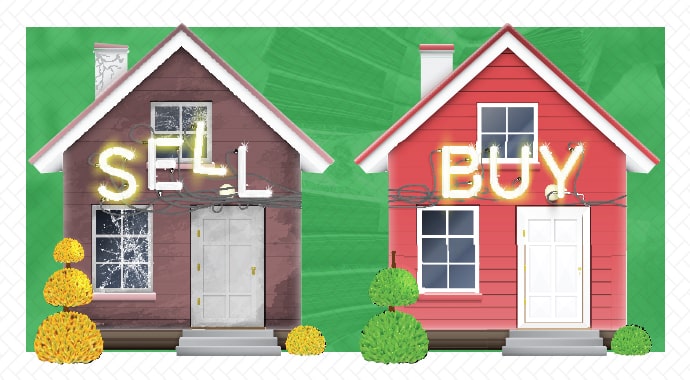
Homeowners who have found a new house, but still haven’t sold their current residence, have a way forward that uses investors operating as iBuyers.
iBuyer companies’ “buy before you sell” services are invaluable to homeowners who want to buy a new house before selling their current property.
iBuyer companies in Florida can provide the cash you need to purchase a new house by using the equity in your current home.
This ready cash allows you to make a clean sale, without any sale contingencies to sell your current residence.
Once you’ve closed on your new home, the iBuyer then finalizes the sales contract on your current property. This arrangement prevents any delay that could risk you losing out on your new place.
Home Sales Process in Florida
Florida home sales follow a few basic steps. Most are required under state laws, but some are common Florida real estate practices.
The first action you need to take is to decide to repair the house (if necessary), or sell it as a fixer property.
The next step involves signing a listing agreement with a Realtor, or taking charge of the sale yourself as a for-sale-by-owner listing.
If you’ve decided to sell to a cash buyer investor, you won’t need a formal listing contract either.
Let’s explore the basic steps in the next segments.
Before Signing a Purchase Contract
Sunshine State homeowners must complete a written property disclosure and provide a copy to prospective buyers. It’s required under Florida law.
The disclosure identifies any material damages that reduce the value of the home and also any risks that might impact the health and safety of the homeowner.
Learn more about the disclosure and what it includes in our article that covers selling a house as is in Florida.
Marketing the Property
Putting buyers’ eyes on your property is the next step in selling a Florida house. This involves promotion when you’re targeting the general public as your buyer pool.
You, or your real estate agent, will need to develop a marketing plan to promote your home.
Most plans include putting up a lawn sign, paying for ads in local media publications, holding broker previews, and public open houses.
You’ll typically also need an online promotion plan that involves posting marketing videos on real estate websites.
In a fast-moving market, your home might sell quickly when you have an effective marketing plan. In slower markets, however, your property could take months before you find a buyer.
If you need to speed up the sale despite the slow market, your best bet is using a cash investor.
They are interested in purchasing all types of properties in any condition, including major fixers and hard-to-sell homes, and they do it fast.
Accepting an Offer
The FAR/BAR ‘AS IS’ Contract, created by Florida Realtors and the Florida Bar Association, is the most widely used sales contract in the Sunshine State.
Your buyer will present that sales contract through a real estate agent to your agent, if you are represented by one.
When selling to an investor or representing yourself as an FSBO, the offer is presented directly to you.
The offer will be accompanied by earnest money. That’s a deposit to demonstrate the buyer’s commitment to the sale.
When you accept the offer, your agent, an attorney, your investor, or you will open escrow.
That’s where a neutral third party takes charge of the legal paperwork and financial transfer of the money necessary to complete the sale, including accepting the earnest money deposit.
Your sale may go through a third-party escrow firm or a title company.
Attorneys can also coordinate sales in the Sunshine State, but that still requires the use of escrow and title services.
You’ll also be on the hook to pay for the legal services in this arrangement.
Buyer Due Diligence Period
After you’ve accepted the buyer’s offer, signed the purchase contract, and escrow has been opened, you’ll then have a period of time when your final documents are being readied and organized.
This is also the time when your buyer completes their due diligence to hire property inspectors and research to answer any questions they may have about your property.
Your buyers have the legal right to hire home inspectors to examine your property during the due diligence period.
They’ll also arrange any financing during this time. Your home will typically have at least one lender appraisal for non-investor sales that aren’t using cash to buy. Investor sales skip appraisals.
Closing
In addition to the formal sales agreement, Florida real estate transactions require other formal documents, including an agency disclosure when working with a real estate broker, that need to be completed.
Your local community may also have mandatory forms and filings before you can finalize the sales transaction.
Your title or escrow officer, and your agent (if you use one), will help you in completing the legal documents required to close the sale.
Once your closing documents are ready, you’ll have a formal closing where you sign the final escrow documents.
While it’s not legally required, you or your buyer may have an attorney present for this signing. The signing can also be done remotely.
Your final closing costs are due at this time. FSBO sellers and homeowners using an agent will pay these, and a commission to the brokerage.
Investors will cover their costs and typically also pay the seller’s fees as well.
After Closing
After the closing, your buyer will receive keys to the property, and the deed to the property will be recorded with the County Clerk of the Circuit Court.
Expert Insight
In a traditional real estate sale, which stage is the most complex and time-consuming for sellers and how could they make it easier?
A clean, well-organized and well-maintained home will almost always sell faster and for a higher premium than a dirty, cluttered, delayed maintenance home.
Before listing your house for sale, get rid of all the things you no longer need, put excess decor into storage, keep counters free and clear, and take down personal photos.
Your home should be set up to look like how it could look if the seller purchased it — seeing photos of little Tommy growing up may make you smile but it will remind a buyer that this is your house which has psychological consequences.
Clean your home and if you can, hire a professional cleaner (and a professional organizer if you need one).
Few people will want to buy a house that smells bad, has stained carpeting, or has broken door knobs — take the time to make your house shine before it goes on the market.
— Krista Goodrich, The Boss Lady Investor LLC, Chief Boss Lady
That is when inspections happen, repair requests come in, the buyer’s financing is being finalized, the title company is working through the file, and everyone is trying to stay on the same page.
A deal can feel solid one day and then hit a snag the next.
This stage gets harder when sellers are not prepared. If the house has repair issues, permit problems, an old roof, HOA questions, or title issues, all of that can slow things down fast.
Buyers may ask for credits, repairs, or price reductions, and that can turn into a lot of back and forth.
The best way for a seller to make this easier is to get ahead of problems early. Have your paperwork ready. Know the condition of the house. Be honest about issues from the start.
If there are HOA documents, permits, or known repairs, get that information together before you list.
The cleaner and more transparent the deal is upfront, the smoother that contract-to-close stage usually goes.
— Ron Myers, Ron Buys Florida Homes, President/CEO
The most complex stage of selling your home is knowing what to list for or ask, knowing what to do to minimize the cost and maximize your presentation for the property itself, and then doing all the work that entails to get your home retail-ready.
If you don’t want to do anything to the property, a cash offer might be the way to go, and that can make it extremely easy for you. But you will take a hit on what you can pocket financially.
Or, hire a professional real estate agent who is active in your marketplace and has active listings and active listings that are also pending or under contract.
— Bryce Spraggins, My Fair Market Offer, Founder
Next Step
Now you know what the Florida house selling process entails and the four ways to sell your home.
The next step will be contacting investors and iBuyers to shop for offers and real estate agents to get quotes for their commission fees.
Since you are already on our website, start with requesting cash offers from HouseCashin investors!
