
How Much Is My House Worth Today? [Instant Property Value Checker Tool]
Even though the information on this web page is provided by a qualified industry expert, it should not be considered as legal, tax, financial or investment advice. Since every individual’s situation is unique, a qualified professional should be consulted before making financial decisions.
To help you see the estimated fair market value of your home, we created this house worth finder.
Simply enter your address into the home value search calculator. It will show you a result based on the current real estate trends in your ZIP code area.
Find out how much your house is worth now!
Know What Your House Is Worth Instantly By Using the Free Online Home Value Lookup Calculator
How accurate is your home value finder?
The most accurate estimated current home value is found in a property valuation report done by a licensed home appraiser.
However, you can also have a real estate broker or agent use their resources to create a less-accurate report of estimated value.
You can also find a ballpark estimate by using our free home value calculator by ZIP code.
However, there are some caveats to consider when using any online home value finder. No quick house value checker will give you as accurate of a snapshot of your home’s worth as an appraiser or broker report. Why not?
The data used by online calculators isn’t always comprehensive. It may leave out sales or include sales from other neighborhoods that don’t qualify as comparable sales.
Some calculators don’t update sales on a regular basis. New sales aren’t loaded quickly so you don’t have an accurate estimate. Even one or two recent sales can have a major impact on your neighborhood values.
Our home worth calculator uses the most recent data from the Multiple Listing Service (MLS), and combines that with information from other timely databases across the United States to offer you the most accurate online tool for an instant estimated market calculation.
Please note that if you are looking for a free appraisal home value report, the results shown by our instant house value estimator can’t be a substitute for an official appraisal.
Unfortunately, there are no home value estimate websites that could provide you with a report that would have legal power.
Only an official property analysis completed by a licensed professional appraiser can do that.
How to value a house for sale?
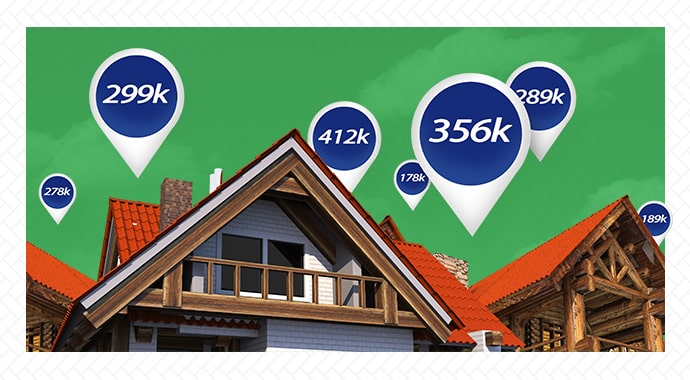
There are a few ways to decide on the house price when you ask yourself about how to value your home before selling it.
The Easiest Way: Contact real estate investors from the HouseCashin network by filling out our simple online form to request cash offers.
Choose an offer you like the most and ask the investor to show you the CMA (comparative market analysis), based on which they made this offer.
This way you will figure out what your house is worth and have an offer (or multiple offers) at the same time.
Calculate House Value Online: Do your own research online by using our online home value estimator and comparable sales (called comps) from home listing sites.
Our web-based house worth checker allows you to get a thumbnail price for your property by using the present home market value estimator tool.
Brokerage: Have a broker or real estate agent provide a Broker Price Opinion (BPO) or Comparative Market Analysis (CMA) for your property.
The comprehensiveness of each varies with your locality and with the real estate professional’s access to sales data and their level of expertise.
Real Estate Appraisal: A licensed appraiser is the gold standard for home value. The reports include a thorough evaluation of the home’s interior, exterior, building parcel, and comparable sales in your specific neighborhood.
What is the market value of a home?

The house market value or true home value is sometimes called the “fair market value” of a property.
It’s the amount an informed buyer would pay for your house with its current characteristics and in the current condition after looking at the comparable sales in your area and the market conditions.
These values assume that neither the seller or buyer are under any duress to sell or to buy.
How to determine home equity value?

You can make a quick ballpark calculation of the equity in your home by using two things: our home worth estimator and the amount of mortgage debt or home liens.
Subtract the remaining debt from the worth estimator amount. That gives you your home equity value. Mortgage companies will typically lend only on a portion of that equity.
Can I sell my house for less than its worth?

Yes, you can sell a house for less than appraised value, and there are instances when doing that might actually be to your advantage.
The appraised value is what your home is worth in the current condition, and in the current real estate market.
If your buyer offers concessions that have monetary value to you, but offers a lower sales price, it may be to your advantage to sell for less than the appraised value.
Let’s consider several scenarios where this might happen.
- You sell your home to a real estate investor who offers to pay your closing costs. The sales offer might be below the appraised value, but your seller closing cost savings might then offset the lower property price.
- A sale to cash house buyers is a quick transaction. It can save you additional mortgage payments, homeowner association fees, insurance premium payments, and property taxes that you’d accrue during the time it takes for a traditional listing and sales transaction to a buyer who needs to go through the scrutiny of the mortgage process. Those savings might be a push compared with the sales price, depending on your monthly costs to keep and maintain your home.
- Your house is appraised at a higher price, but you have fines, fees, or sanctions from your locality that require you to spend cash to remedy the legal violations of safety or health codes. Selling a home in as-is condition to a cash real estate buyer would eliminate your need to lay out cash to do the modifications to meet codes, and that might entice you to accept a lower sales price for your property.
- You sell at below appraisal value because real estate investors agree to clean the house for you. That could be a significant time savings, so you accept a lower price in exchange for eliminating the headache of locating workers and supervising the cleanup. Not to mention the expense to get rid of the items left in the property.
Balancing all of the time and cost savings with the sales offer gives you a more accurate picture when setting a bottom line price for your home.
Why is my home value going down or up?

The value of your home may increase or decrease by a small degree — sometimes in the same month in a fast-moving market — but typically the overall value stays within a general range for a longer period.
Economic trends, like the availability of local housing and the mortgage interest rates, influence residential real estate prices.
State and community actions also impact home values.
If the state or county constructs a major highway, prison, or sewage treatment plant adjacent to your neighborhood, you may see a dramatic decline in the value of your property.
Industrial development close to residential properties also negatively impacts the real estate value of your home.
If you want to know how much your house is worth now and get fair market value of your home, use our online valuation tool.
Or, for a highly accurate and official estimate, get a CMA report from a professional cash buyer, a real estate agent, or an appraiser.
Will a Realtor tell me how much my house is worth?

A Realtor can assist you in how to find out the value of your home, but an agent or real estate broker’s opinion doesn’t have the same weight as a professional home appraisal.
The legality of receiving a Broker Price Opinion (BPO) depends on your state and locality. Some allow the broker to charge a fee for this service; others prohibit it in most situations.
A fee for a BPO might be approved in cases where the broker is doing a business-to-business evaluation, including for lenders who hire a broker to provide a professional assessment when completing underwriting for a second mortgage or for a refinance application on a property.
A BPO is a report of your home worth on any given day in that specific real estate market. It doesn’t mean you can sell your house for that amount.
It’s the broker’s expert opinion after doing an analysis of prior similar sales by using your geographic location and the general physical information, home amenities, and condition of your property to provide an estimate of value.
A CMA provides the property value near you. It is an estimate of the value on any given day of like properties in similar condition sold in your area. As new sales happen, your value may increase or decrease with those trends.
There’s no guarantee that your home will attract a buyer who will pay the same price for your property on that day, or even in the future.
A CMA is only a quick snapshot of what other buyers paid for similar houses over a 3-6 month period.
A Comparative Market Analysis (CMA) is typically done by agents without charge in most states when sellers use that agent to list a property.
Agents may charge a fee for the service when the homeowner isn’t interested in listing, or the owner is collecting input from other agents to determine pricing for a listing done by another real estate professional.
How to find the appraisal value of a home?
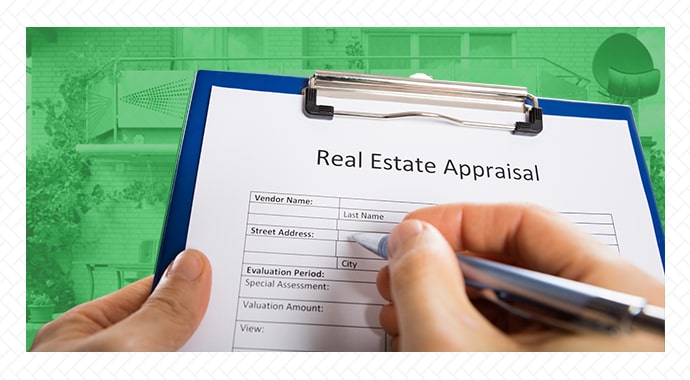
A formal written appraisal is an in-depth evaluation of your property by a licensed professional who has training and experience in the field.
Real estate agents and brokers don’t do the same intensive examination conducted by appraisers.
Appraisers use comparative sales, similar to agents and brokers, but they also examine the roof to determine years left of viability, foundation for damages, materials used for house cladding, and even things like the property’s landscaping.
Appraisal reports offer detailed information about code compliance, types and quality of original finishes and building materials, and the lifetime remaining before those need to be repaired or replaced.
Plumbing, electrical, fuel sources, and heating and cooling systems are also evaluated, and any material defects are noted.
Appraisers use a variety of methods. A drive-by appraisal for a loan refinancing might meet the lender’s standards when the comparable sales in the neighborhood are a match.
In this case, the appraiser would simply look at the residence from the street to determine it matches the physical address and the photos of the property being considered for the loan.
A more comprehensive appraisal is necessary when the home doesn’t have many comparable sales in the neighborhood, or the property listing includes a number of itemized material damages that might negatively impact the home’s value.
Locating a prior appraisal for the property can be time-consuming and not always productive. Some paid services collect appraisals that you can purchase, but you may not find your property in the company’s inventory.
Some county assessor’s offices also have this information, in addition to tax appraisals that can provide information about modifications done to a property.
If your home requires an appraisal for a mortgage, you might be able to request a copy from your lender. However, you’d have to be the one filing for the loan to receive a copy.
Local real estate brokerages sometimes keep copies of appraisal reports for agent sales, and your state law may allow your agent to obtain copies from the broker’s files.
If you require an appraisal for a specific point of time in the past, some appraisers are certified to conduct that type of property report. These are known as historic or retrospective appraisals.
Retrospective appraisals are done for a number of legal reasons, including tax purposes when depreciating a property over time, for probate or divorce court proceedings, and for property tax disputes.
The only way to have a current appraisal is to contract a professional and have them conduct the property assessment. Older reports may provide valuable and interesting information, but they’re not current.
