
Selling a Home As Is in Hawaii (A-to-Z Guide)
Even though the information on this web page is provided by a qualified industry expert, it should not be considered as legal, tax, financial or investment advice. Since every individual’s situation is unique, a qualified professional should be consulted before making financial decisions.
“How do I go about selling my house ‘as is’ in Hawaii?” — You’ve come to the right place to find the answer to this question.
This article defines the term ‘as is’, explores different ways to sell a house, and reviews the advantages and disadvantages of each sales option.
Let’s start with defining ‘as is’.
What Does It Mean to Sell a House As Is in Hawaii?

‘As is’ means the seller offers the house as the buyer sees it. No repairs, replacements, or modifications are included in the price.
The standard Hawaiian sales contract doesn’t have an ‘as is’ condition clause.
Sellers, however, can sell a house without making any repairs to the property by filling out the disclosure form to notify potential buyers of any issues with the house or property.
Can You Sell a House As Is in Hawaii?

Yes, you can sell a home ‘as is’ in Hawaii.
There are several things a seller must do to sell ‘as is’. The first is to complete the mandatory disclosure statement that lists the things you know are wrong with the house.
You don’t need to hire an inspector to do the inventory. It’s simply a listing of what you know about the house.
The second thing is to allow the buyer access to the house and time to complete property inspections. The buyer must pay the fees for this service.
Let’s now explore what happens when you sell your house ‘as is’ in Hawaii. The first stop to selling is completing the disclosure statement.
What Do Hawaii Real Estate Disclosure Laws Require?
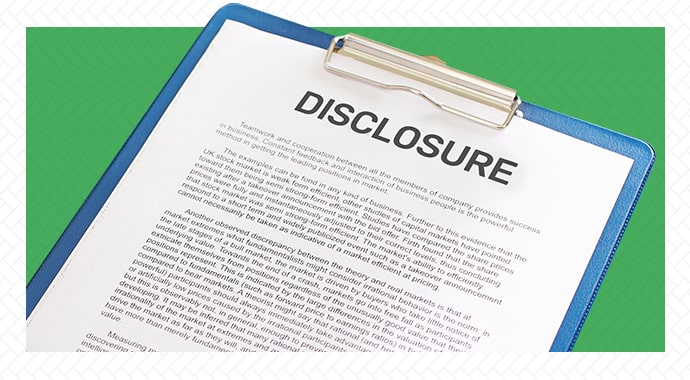
When you sell a Hawaii house in ‘as is’ condition, state law Hawaii Rev. Statute 508D requires the owner to complete a real estate disclosure form and provide that form to prospective buyers.
Owners must disclose material facts about the house that are known to them.
A material fact is any defect or condition that would impact the value of the residential real property (one to four units, condominium, or cooperative apartment) used as a residence.
The disclosure requirement includes both past and present problems and conditions.
The seller must fill out the disclosure form no earlier than six months before the sale, and no later than 10 calendar days after accepting an offer.
The Hawaiian form is a series of checklists, but buyers will expect to see additional details from the seller for boxes checked “yes” indicating a known material defect or condition.
Hawaii’s comprehensive disclosure has a number of unique considerations that typically aren’t found on disclosures for other states.
- Selling a house in a flood zone, designated volcanic hazard zone, or tsunami zone needs to be disclosed. Sellers must also disclose if the house required an elevation or state shoreline certificate to be constructed.
- Selling a home near military bases or an airport flight path needs a special disclosure. If you know of any unexploded military ordnance on or near your property, or if ordnance has been removed in the past, these must be disclosed.
- Selling a home with present or past infestations of bed bugs, termites, ants, or other island pests must be reported on the disclosure. The same is true with excessive noise from things like coqui frogs, proximity to traffic, or noise from nearby commercial venues.
- Selling a house requires disclosing the land holding. A significant amount of the land on the islands is owned by the state and the federal government, and the disclosure requires the exact details of any lease agreements for your house.
Other disclosure categories match the other 49 states more closely, including:
- Selling a house with a history of homicide, suicide, or burglary needs to be disclosed. Haunted houses aren’t specifically mentioned, but transparency is encouraged.
- Hawaii doesn’t allow hydraulic fracturing (fracking), but selling a house with geothermal power or a home near drilling operations for geothermal power is a disclosure category.
- Selling a house with mold, lead pipes, permitted and unpermitted work, radon, asbestos, lead paint, septic system failure or foundation problems, and water damage or fire damage need to be disclosed with a detailed explanation of the problem.
- While selling a house with polybutylene pipes isn’t specifically asked on the disclosure, the form requires details of the home’s plumbing to be disclosed.
You can leave stuff behind when you sell your Hawaii house ‘as is’, but you’ll need to include an inventory of the items on the sales contract and the property disclosure.
The buyer must also agree to accept the items.
Expert Insight
What are the common pitfalls related to properly disclosing the home’s condition?
Just because you’re selling a home as-is in Hawaiʻi doesn’t mean you don’t have to disclose what you know about the property, including repairs or issues that may still need to be addressed.
Where homeowners can get into trouble is minimizing something because it happened years ago, or because they believe it was already fixed.
Past water intrusion, termite damage, unpermitted work, roof or plumbing issues, or other known conditions can still be important for a buyer to know.
I always tell sellers, when in doubt, disclose it. You don’t have to diagnose the problem or pretend to be an expert.
Just be transparent about what you know, provide any documentation you have, and let the buyer’s inspectors and professionals evaluate the current condition.
Trying to hide or minimize something can create a much bigger problem and potentially follow you long after the home has sold. It’s always better to be upfront from the beginning.
— Teondra Mills, Pacific Luxe Group Powered by Nagwa Saas Realty, Luxury Realtor
Should I Sell My House As Is in Hawaii?
The first question you need to consider is, “Should you sell your Hawaii house ‘as is’ or fix it up?
This is an important decision. Do you have the time and energy to repair things to market your home as “move-in ready”? Would selling ‘as is’ be easier?
Let’s explore the advantages and disadvantages to help you make that decision.
Why sell a Hawaii house ‘as is’? There are a number of advantages.
Pros of Selling Your House As Is
- Selling ‘as is’ means you won’t have the task of finding contractors and supervising the work. You also won’t have to pay for those repairs.
- Your house will get sold faster when you don’t take time to do repairs before listing. Selling to a cash house buyer in Hawaii who is interested in an ‘as is’ sale moves the sale to close even quicker.
- No need to negotiate with buyers over problems found by a home inspector when you sell ‘as is’. It takes time to develop a legal written answer, even when you’re informing the buyer that you refuse to do any repairs.
- All professional inspections done by a Hawaiian home inspector need to be shared with potential buyers. Avoiding inspections means less to share with other potential buyers.
- Many cash buyers will allow you to close the sale without any additional house cleaning. Some even allow you to leave things behind.
Not everything is perfect when marketing an ‘as is’ home. Some disadvantages may outweigh the advantages.
Cons of Selling Your House As Is
- You probably won’t receive the maximum possible market value for your house. Turnkey houses have higher selling prices, and houses that need major repairs generally sell for considerably less.
- Your buyer pool will be limited with a fixer. Most traditional buyers want to buy turnkey properties. A cash real estate buyer in Hawaii, however, is interested in buying fixers.
When you sit down and add up the time and cash spent on making home repairs, also consider the hidden costs of ownership that you’ll pay during the time it takes to do those repairs.
Mortgage interest, utilities, any association fees, and property taxes — all must be paid during the repair period. These also aren’t part of the traditional seller closing costs.
When you compare the ‘as is’ offer, it might be higher than the sales price for a turnkey home after you subtract the cost of repairs and the hidden costs.
The next question we need to answer is, “How does selling a house ‘as is’ work in Hawaii?”
There are three main options for selling your house ‘as is’ in the Aloha State. Let’s start with the first one — selling to an investor.
How to Sell a House As Is By Owner Without an Agent in Hawaii
How to Sell a House As Is, Fast and For Cash Directly to an Investor
Before exploring the details of selling your house to an investor, it helps to know who investors are and what type of investments they want to buy.
Who Are Cash House Buyers?
Cash house buyers purchase residential investment properties in Hawaii. An investor is interested in buying a house for a rental business or fixing and flipping (reselling) it.
Cash house buyers have cash or access to cash that is faster than traditional financing. They want to move quickly to close the sale.
Hawaii property investors look for:
- workers selling a house for job relocation
- heirs selling a house after probate or during it
- homeowners selling a house with taxes owed
- people selling a damaged house
- seniors selling to downsize
- people selling to pay past tax liens
- homeowners selling a house in a divorce situation
Investors typically skip the requests made by most home buyers. This means investors can often assess the property without a formal inspection or appraisal.
They also won’t nitpick by using the details found on inspections with requests for a list of small repairs before closing.
Pros of Selling Your House As Is Directly to an Investor
- When you sell your house for cash to an investor, it’s a fast sale. Cash sales can close in a week, sometimes less.
- Cash offers don’t require formal appraisals by lenders, and professional and experienced investors often don’t require detailed inspections. Eliminating both saves you time.
- If you sell without a realtor, and your investor doesn’t use a real estate agent, you’ll skip paying any commission fees.
- Investors typically pick up the tab for both sides of the closing costs for the sale. Those costs can be significant.
Cons of Selling Your House As Is Directly to an Investor
- Investors may not give you market value for your house. They will subtract the cost of repairs, plus a profit margin from the offer they’ll make.
- If you don’t have a real estate professional to represent your interests (which is most often the case in such a sale), you might be missing out on some possible concessions from the cash buyer. Selecting an investor with a long history, however, means a greater chance the deal will be fair to both sides in the transaction. Unethical investors typically don’t stay in business long.
Finding the Best Cash House Buying Company
Finding a cash house buying company is as easy as opening your favorite internet browser and searching by using a few terms to bring up investors in your area.
- we buy houses Honolulu HI
- sell my house fast Honolulu HI
- sell my house for cash Honolulu HI
- cash house buyers in Honolulu HI
- iBuyer companies in Honolulu HI
Once you’ve found at least three-to-five companies, look for the “About Us” page where you can find information about the business and the investor’s experience.
Look for companies with at least three years of experience. Narrowing your choices by using experience in the field gives you more assurance that your sale will close.
HouseCashin makes offers on ‘as is’ properties, and also vets local cash house buyers for your area.
Request a cash offer now to get connected with up to five professional and ethical Hawaii investors and compare their offers.
How to Choose an Ethical Investor?
It’s advisable to do some research on your potential investors before you request a cash offer on your home.
Check the local branch of the Better Business Bureau (BBB) for any complaints filed against the investor.
Look through comments on consumer review sites for negative comments. If you’re seeing repeated complaints, it’s time to move on to another investor.
Ask friends, family, and neighbors for recommendations. Referrals are an excellent way to vet prospective investors.
Expert Insight
What should home sellers look for when screening cash house buyers?
But convenience can come at a cost, so I always tell homeowners to do research to know exactly who they’re dealing with.
Here in Hawaiʻi, start by researching the company. Look them up online, read reviews, see how long they’ve been in business, and check the company through the Hawaiʻi Department of Commerce and Consumer Affairs (DCCA).
DCCA has tools that allow consumers to look up businesses, professional licenses, and even complaint history.
Then ask questions. Are they actually buying your home themselves, or are they planning to assign the contract to another investor?
Can they provide proof of funds? What contingencies are in the contract? Who is paying the closing costs?
Can they change the price after inspections? And most importantly, what are you actually walking away with at closing?
— Teondra Mills, Pacific Luxe Group Powered by Nagwa Saas Realty, Luxury Realtor
How to Sell a House As Is by Listing It by Owner
When selling a home in Hawaii on your own, you have to take the lead in every aspect, from setting the price to marketing and negotiating with buyers.
In determining the price, you have to understand the value of your home. You need to know what it’s worth in the current market to set a fair and competitive price that draws buyers while ensuring you get the best possible return.
Where Can You List a House For Sale by Owner?
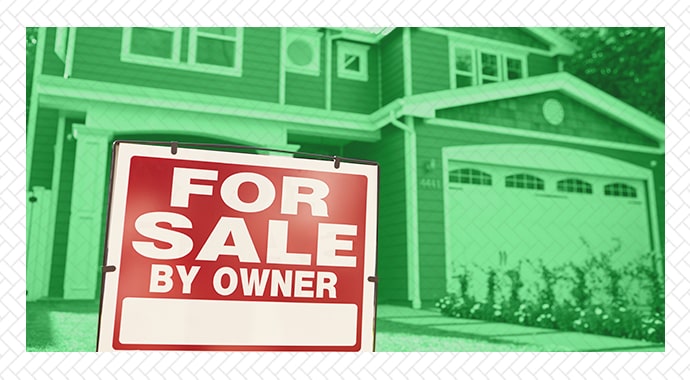
The easiest way to list a home for sale by owner, known as an FSBO, is to put a sign on the lawn. This will notify neighbors who might have friends or relatives who want to buy.
If your house is located in a heavily traveled area, putting a sign on your lawn might attract a qualified buyer.
Other listing options include using online FSBO listing sites. Many are free, but some charge a nominal fee to list.
Some Realtors, Hawaiian members of the National Association of Realtors (NAR), offer limited listing services by using the trade organization’s Multiple Listing Service. This service requires a fee rather than a sales commission.
Pros of Selling Your House by Listing It by Owner
- One major advantage in selling your house yourself is you’ll avoid paying real estate seller’s agent commissions. Hawaii agents (both seller’s and buyer’s) earn 5-6% of the sales price, so 2.5-3% that you don’t have to pay to the seller’s agent is a major savings.
- You are in charge of everything in an FSBO transaction. From deciding on a price to selecting a date to close, you make all the decisions.
- You’ll not have to depend on the realtor’s schedule when marketing and showing your house. Real estate agents typically have multiple clients and need to divide their time among them.
Cons of Selling Your House by Listing It by Owner
- Buyers are typically represented by a real estate agent. That means you’ll still be on the hook for the 2.5-3% commission fees paid to the buyer’s agent.
- Most buyers also need a mortgage to purchase your house. You’ll need to wait for buyer approval, the house appraisal to be completed, and for loan underwriting to happen.
- The Realtor is your fiduciary. They’re charged with representing your best interests with their training and expertise. You won’t have that professional representation when you work alone. You’ll need to understand the procedures and details of the selling process, including the itemized accounting of closing costs when selling a home by owner.
- If you don’t understand the listing and selling process, you may lose time or money when selling on your own. You might even end up in court — even when you made an unintentional mistake.
Expert Insight
What are the common pitfalls when selling a house by owner?
Put up a sign, post some pictures online, find a buyer, and save the commission. But it’s not that easy.
There is a lot that happens between putting your home on the market and actually getting it to the closing table.
One of the biggest mistakes I see is pricing. Your neighbor may have sold for $1.5 million, but that doesn’t automatically mean your home is worth $1.5 million.
Condition, location, upgrades, lot size, views, and even which side of the street you’re on can make a difference.
If you start too high, you can lose some of your best buyer interest right out of the gate, and then you may end up chasing the market down with price reductions.
Marketing is another big one. Taking a few pictures with your phone and putting the home online is very different from having professional photography, video, proper exposure, open houses, and a strategy for getting the property in front of buyers.
This is especially important in Hawaiʻi because your buyer may be sitting in California, Texas, Japan, or somewhere else thousands of miles away. Your online presentation may be their first showing.
And there are a million little things most sellers don’t think about until they’re in the middle of the transaction.
There are pages and pages of contracts and paperwork, deadlines, inspections, appraisals, title, title insurance, escrow, liens and mortgage payoffs, seller disclosures, repair requests, closing costs and taxes.
In Hawaiʻi, you also need to understand things like conveyance tax, HARPTA withholding if you’re a nonresident seller, and GET that may be charged on certain professional services.
Then someone actually brings you an offer. Is the buyer really qualified? Do you understand all of the contingencies and what you’re agreeing to?
What happens when the inspection comes back with 20 items and the buyer wants a $30,000 credit? What happens if the appraisal comes in low?
What deadlines could give the buyer the right to walk away? There are a lot of moving pieces, and you want to make sure you’re protected throughout the transaction.
— Teondra Mills, Pacific Luxe Group Powered by Nagwa Saas Realty, Luxury Realtor
How to Sell a House As Is in Hawaii with an Agent

Who Are Real Estate Agents?
Real estate agents are state-licensed professionals who work under the supervision of a broker. Agents undergo mandatory real estate training and take an exam to qualify for a license.
An agent assists either seller or buyer in navigating a real estate transaction. They take an oath to put the interests of their client first above all others in a transaction.
They are the one who will market your property and find you a buyer.
This fiduciary duty means your agent considers your personal interests in the sale and works so you receive the highest sales price as a seller.
Agents using the title “Realtor” belong to a state trade association affiliated with the National Association of Realtors (NAR).
Realtors follow a code of ethics, and the state boards hold the local members to that oath with fines and license suspensions for infractions.
Pros of Selling Your House As Is with a Real Estate Agent
- Realtors have access to a state database of prior comparable sales. This helps them get the best price for your property.
- Agents take a fiduciary oath to represent your best interests. You’ll have a specialist who knows real estate law and will use it to represent you in all steps of the sales transaction.
Cons of Selling Your House As Is with a Real Estate Agent
- Your cost when selling a house with a Realtor will be high due to real estate agent commissions. These fees are the greatest charge on the Hawaii closing costs final accounting.
- You may end up waiting for a buyer, and it could take time. Your agent may market your house by using broker previews and open houses during this wait time.
- Most buyers who work with agents need a loan to buy your house. This means wait times for a mortgage application, approval, and final underwriting for the loan.
How to Choose an Ethical Real Estate Agent?
Hawaii has a large pool of real estate agents. Some even specialize in handling ‘as is’ property listings.
Selecting an agent requires some research to make sure your representative is both professional and ethical.
One way to find an agent is to ask your family, friends, and coworkers for recommendations.
Look for agents with experience in selling properties. Also look for agents with experience in selling specifically ‘as is’ properties.
Find an agent who knows your neighborhood and has sold homes there. Check complaints filed against an agent with the local branch of the Better Business Bureau (BBB).
The Hawaii Association of Realtors (HAR) regulates members to ensure they provide ethical services.
Research the Hawaii Association of Realtors local boards for any complaints filed against your potential agents.
We’ve explored the pros and cons of an ‘as is’ sale, and the different ways you can sell your house in the Aloha State.
The only thing left to do is to select the one that best fits your needs and sell!
Expert Insight
What should home sellers look for when screening real estate agents to hire?
Selling a home is a big financial transaction, and whether your home is in Hawaiʻi Kai, Mililani, or anywhere in between, you want an agent who really understands that specific area, your type of property, and what buyers are actually looking for.
One of the biggest mistakes sellers make is choosing the agent who tells them the highest list price.
Sometimes that number sounds great, but you have to ask, “How did you come up with that price?”
A good agent should be able to show you the comparable sales, explain the competition, and have a real strategy behind that number.
Pricing too high may sound good in the beginning, but if the price isn’t realistic, you can lose that initial window of buyer interest.
Then your home can sit on the market much longer, and that can end up costing you big dollars in the end.
— Teondra Mills, Pacific Luxe Group Powered by Nagwa Saas Realty, Luxury Realtor
