
Selling a Home As Is in Washington, D.C. (A-to-Z Guide)
Even though the information on this web page is provided by a qualified industry expert, it should not be considered as legal, tax, financial or investment advice. Since every individual’s situation is unique, a qualified professional should be consulted before making financial decisions.
This guide describes how to sell a Washington, D.C. house in ‘as is’ condition.
We’ll start with the definition of ‘as is’, describe the property disclosure requirements, and then introduce three ways to sell in the District, including advantages and disadvantages of each sales approach.
Before we get down to the details of what happens when you sell your house ‘as is’ in Washington, D.C., we need to define an important term.
What Does It Mean to Sell a House As Is in Washington, D.C.?

Homeowners selling a property in ‘as is’ condition don’t intend to replace, repair, or modify anything. They’re selling the house exactly as the buyer finds it on the day the sales contract is signed.
The Washington, D.C. sales contract has an ‘as is’ condition clause that states the property is conveyed with all faults and without any express or implied warranties given by anyone legally involved in the sale process.
Can You Sell a House As Is in Washington, D.C.?

Absolutely! You can sell a home ‘as is’ in Washington, D.C., just like in any other state. However, you must follow certain rules and laws.
Let’s now explore the sales details to answer “How does selling a house ‘as is’ work in Washington, D.C.?”
What Do Washington, D.C. Real Estate Disclosure Laws Require?
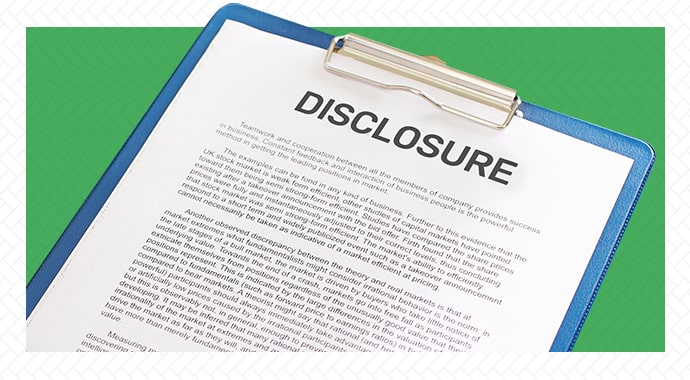
The District of Columbia Residential Real Property Seller Disclosure Act requires homeowners to complete the written assessment and deliver it to prospective buyers before or at the time the sales agreement is signed.
If the seller does not provide a copy of the disclosure prior to the sale, the buyer can cancel the contract within five calendar days and have their deposit returned in full.
There are, however, a few exceptions to the disclosure requirement.
One is for fiduciaries selling a home they’ve never occupied. Another allows sellers in a foreclosure agreement sale to forego the property assessment.
Homeowners selling a house in a flood zone and homes that have had fire damage or water damage must be transparent about these defects on the disclosure statement.
Property owners selling a home with foundation issues, or a house with asbestos, mold, or radon gas, must disclose these conditions.
Any unpermitted work on the property must also be disclosed. If the home has urea formaldehyde foam insulation, that also needs a disclosure note.
Owners selling a house with lead pipes can include this hazard under a general category on the form that asks for details about “substance, materials, or environmental hazards”.
If your home has polybutylene pipes, that must be checked as a current plumbing condition on the form.
The written disclosure asks for specific details when selling a house with septic system failure, termite damage, and active insect infestations, including bed bugs.
While selling a haunted house isn’t something that needs to be disclosed on the form, there are several questions dealing with historic preservation status since many residences in the District are federally registered properties.
Homeowners selling a house with lead paint must disclose that on the District form, and also on a federal form used exclusively for residences constructed before 1978.
Federal law requires sellers (or their agent) to provide the new buyer a copy of the federal lead paint disclosure that summarizes information about the health hazards of exposure to lead.
You can leave stuff behind when you sell your Washington, D.C. house ‘as is’ as long as it’s part of a written formal sales contract.
Expert Insight
What are the common pitfalls related to properly disclosing the home’s condition?
Washington, DC now requires a seller to disclose any known material defects in the property.
Sellers who have disregarded something like a history of water intrusion, roof age, or past pest damage because they thought the as-is clause would protect them after closing are still legally liable for these undisclosed defects.
— Devin Henry, Nomadic Real Estate, President
Should I Sell My House As Is in Washington, D.C.?

The first step in selling requires you to answer the question, “Should you sell your Washington, D.C. house ‘as is’ or fix it up?”
Let’s break that question down into two parts. The first focuses on this question, “Why sell a Washington, D.C. house ‘as is’?” There are a number of advantages to selling as a fixer.
Pros of Selling Your House As Is
- The obvious advantage is you won’t have the hassle of doing repairs. Those can be expensive, even when you do all the work yourself. If you are hiring someone, you’ll also avoid the need to supervise repair crews.
- Skipping fixing means you can sell faster. You won’t have the downtime while you wait for the repairs to be completed. ‘As is’ sales can move even faster when you sell to a Washington, D.C. cash house buyer. Cash buyers don’t need loan approval or lender property appraisals.
- Traditional buyers typically hire a Washington, D.C. home inspector to complete an assessment of your property. Property shoppers looking for a turnkey home will ask you to replace or repair items on the inspector’s list. Selling ‘as is’ lets you avoid these demands.
- Professional ‘as is’ cash buyers generally allow you to leave items behind in the house. This can be a major time saver for sellers.
Let’s now answer the question, “What are the downsides to selling a house as a fixer?” There are a few.
Cons of Selling Your House As Is
- You typically won’t receive a sales price that matches turnkey house offers. Understanding the estimated closing costs for sellers can help you set a bottom sales price to accept for your property.
- Your buying pool will be restricted when selling as a fixer. Typical home buyers have little interest in ‘as is’ properties. Fortunately, there is one type of buyer who is interested in fixers — cash investors.
Once you’ve made your mind up about selling as a fixer or doing the repairs, the next question to answer is, “How do I go about selling my house ‘as is’ in Washington, D.C.?”
The first option is to sell to a Washington, D.C. cash real estate buyer. We’ll outline the details of an investor sale in the next segment.
How to Sell a House As Is By Owner Without an Agent in Washington, D.C.

How to Sell a House As Is, Fast and For Cash Directly to an Investor
Who Are Cash House Buyers?
Cash house buyers are investors who purchase real property. Some operate independently, while others work with a group of professionals in a firm. Hedge funds also pool cash to buy property.
Some investors have their own cash to purchase properties, but other cash buyers may solicit loans from private lenders to do business.
Private money loans move much faster than traditional home mortgages because there isn’t the need to do property appraisals or have an underwriter approve the loan. This can shave weeks off the time needed to close escrow.
Cash buyers purchase Washington, D.C. investment properties to repair and then resell to other buyers.
A number of real estate investors in Washington, D.C. own companies that focus on buying rental homes to use as a source of regular income.
Cash buyers can be a resource to assist you during the escrow process when you sell your house to a real estate investor.
Professional home investors assist people in the following situations:
- heirs selling an estate home
- homeowners selling a house that needs work
- former partners selling a house after divorce
- seniors wanting to downsize to a smaller house
- workers selling a house for job relocation
- property owners facing a home foreclosure
- owners selling a house with an IRS tax lien
Cash buyers frequently work with Washington, D.C. investor-friendly title companies that have expertise in closing investment sales quickly and professionally.
Pros of Selling Your House As Is Directly to an Investor
- A cash house buying company offers a speedy close.
- Cash investors won’t require a team of inspectors to visit and examine your house in detail. They also won’t need lender approval that can delay the close by weeks.
- Professional investors don’t use real estate agents, so you’ll skip these commission fees. Real estate commissions in Washington, D.C. average 5-6% of the property’s sale price. That’s a significant savings!
- Investors will pay your closing costs. That’s another major savings for sellers!
- You’ll have less hassle when selling to an investor compared with a traditional buyer who is looking for a turnkey property. Cash investors understand the meaning of ‘as is condition’.
Cons of Selling Your House As Is Directly to an Investor
- You probably won’t receive a turnkey price from an investor who deducts the cost of home repairs from the after-repair value of your home, as well as factoring in an element of potential profit that they need to make by reselling your house.
- You won’t have a real estate agent to guide you through the process. Although, when you work with a cash investor with at least three years of experience and a long history of closing sales, this shouldn’t be a problem. Investment buyers take the lead during the escrow process — and do it without charging any commission fee.
Finding the Best Cash House Buying Company
You can locate a number of local cash house buying companies by using your internet browser and some of the search terms listed here:
- we buy houses Washington, D.C.
- sell my house fast in Washington, D.C.
- cash house buyers in Washington, D.C.
- sell my house for cash in Washington, D.C.
- iBuyer companies Washington, D.C.
Once you’ve identified a few local investors, you can start the vetting process.
How to Choose an Ethical Investor?
Locate the “About Us” page on the investor’s website. This should detail some information about the person or company. Look for cash buyers with at least three years of experience in the field.
Ethical investors are transparent about their background and buying experience, so if there isn’t any of this information on the website, or there isn’t a background page for the company, you may want to scratch that investor from your list of prospects.
The local branch of the Better Business Bureau (BBB) can assist with the next step. The local BBB website records complaints filed against investors.
If there are open complaints, or complaints that weren’t completed to the seller’s satisfaction, it may be time to select a different investor from your list.
The next place to look is the local consumer websites. If you’re seeing unhappy sellers on these sites, move down your list of prospects.
If you’re thinking vetting sounds like a lot of work and effort, you’d be correct. If you’d like to have someone else do the screening work for you, request cash offers online from HouseCashin.
With only one quick online request, you can receive multiple offers from local real estate investors. HouseCashin will handle the detailed prescreening for you.
We vet our partnering cash buyers, so the offers you receive will be from experienced professionals with a track record of closing sales.
No matter how many cash offers you receive, there’s never any fee. And there isn’t any obligation to accept any of the offers made by the investors! Request your cash offers now.
Another sales option is to market your house yourself. Let’s review that process in the next segment of this guide.
Expert Insight
What should home sellers look for when screening cash house buyers?
They send out mass offers, hold your property under contract, and try to renegotiate right before closing when you’re mentally checked out of that property.
Before you take an offer from any company seriously, ask for their actual proof of funds.
— Devin Henry, Nomadic Real Estate, President
How to Sell a House As Is by Listing It by Owner
In most cases, people hire real estate agents to help them sell their properties. But it’s not mandatory.
A house offered for sale without an agent is known in the real estate field as a “for sale by owner” listing, or an FSBO. This is when you take charge of the entire sale process yourself.
The first thing to do when you’re selling a home by yourself is to calculate your home’s value. This step is crucial because it helps you set a price that’s both competitive and fair for you and your potential buyers.
Let’s now check out your options for listing your property via FSBO.
Where Can You List a House For Sale by Owner?
One of the most difficult parts of offering your home for sale is to locate prospective buyers.
It may seem easy to put a “for sale” sign on the property, but a sign alone probably won’t put enough eyes on your listing — particularly if your house isn’t on a well-traveled street.
You can add buyers’ eyes on your home with online advertising by using one of a number of FSBO websites. Most postings are free, but some charge a nominal fee.
When you take on the duties of selling, there are a number of advantages.
Pros of Selling Your House by Listing It by Owner
- You won’t have any commissions when selling as an FSBO. The average brokerage fees in Washington, D.C. run 5-6% of the sales price.
- You are in charge of all aspects of the sale, including listing when it’s convenient, showing the property on your schedule, and closing the escrow on your timetable.
- While real estate agents typically work with a number of clients, you have only your property to market and sell. You can devote all your time and energy to getting your house sold.
While these advantages may sound enticing, there are some downsides to an FSBO sale.
Cons of Selling Your House by Listing It by Owner
- Sales to non-investors typically use mortgage lenders. This can delay your sale for weeks, sometimes longer with an ‘as is’ sale, while your buyer qualifies for the loan and your house undergoes an appraisal.
- FSBO sales require some rudimentary real estate knowledge to successfully complete a sale.
- You might make a mistake in representing your property or completing the legal requirements for a sale. These can delay the sale — or even blow it up, so you’ll have to begin the marketing process again. Understanding the FSBO closing costs is a basic requirement when selling your home yourself.
Expert Insight
What are the common pitfalls when selling a house by owner?
Many sellers look up a few Zillow comps, round up to a number they feel is appropriate, and list their property for a price that does not reflect what home buyers are paying.
Many times, a home is listed for sale at a price that is too high and as a result, during the first two weeks of the listing period, there is the highest level of buyer interest.
— Devin Henry, Nomadic Real Estate, President
How to Sell a House As Is in Washington, D.C. with an Agent

Who Are Real Estate Agents?
A real estate agent is your professional fiduciary during your home sale. They put your interests above all others. Agents assist you in listing, marketing, and selling your house.
Your agent will complete your listing agreement, help you fill out the required disclosures, market your home to potential buyers, and then help negotiate the sale.
After you’ve signed a sales contract, your agent will guide you through the escrow process.
Real estate agents working in Washington, D.C. must be licensed and must operate under the supervision of a licensed broker.
Agents using the title of “Realtor” are members of the D.C. branch of the National Association of Realtors (NAR). They take an association oath to follow ethical rules of business practices.
Pros of Selling Your House As Is with a Real Estate Agent
- Realtors have access to a proprietary database of current and prior sales in your area. This information helps you set an aggressive sales price that can bring the highest return on your property.
- Licensed agents have passed a series of exams on key real estate areas, including contracts, marketing, ethics, and finance. This background can assist you in listing, marketing, and selling your house in Washington, D.C.
Cons of Selling Your House As Is with a Real Estate Agent
- The average Realtor cost to sell a home is the most significant portion of the sales closing costs in Washington, D.C. This fee is a major downside to working with an agent.
- You are just one of a group of clients your agent works with during the week. You’ll need to share your time with others — and that could mean a delay in selling your property.
- Most buyers brought by real estate agents need a mortgage to buy. You’ll sit and wait as they go through the traditional loan process. Mortgages add weeks of wait for the lender to qualify your buyer, and then to process the loan and appraise your home.
How to Choose an Ethical Real Estate Agent?
There are a number of real estate agents to choose from in the District, and vetting the best match for you and your home requires some time.
The first step is to collect some prospects. You can do this by asking friends, coworkers, and family for their recommendations.
You can also assemble a list by noting Realtors’ names on the “for sale” signs in your neighborhood. Look for the houses with “sold” signs, rather than an agent who simply lists without selling.
The next step is to vet those agents. Begin by checking membership in the Greater Capital Area Association of Realtors.
That’s the local branch of the National Association of Realtors, a professional trade organization where members take an oath of ethics and pledge to uphold the highest level of business professionalism.
Use the District’s License Lookup to make sure the agents hold an active current license and don’t have any complaints filed against them. Scratch agents from your list with prior or active filings.
Then, search the D.C. area Better Business Bureau (BBB) online for complaints filed against any of your prospects. Also, remove agents with unresolved cases on this site.
When you have done that vetting, eliminate real estate professionals with less than three years in the field.
You want an agent with some significant sales experience to represent you, and that’s a minimum time to gain some expertise in sales.
And the last step is to invite three agents from your list to be interviewed individually at your property.
Ask them to bring their professional portfolio, a list of recommendations with contact information, and a marketing plan for your house.
Select the Realtor with the best plan and the one you feel you have the ability to work well with during the sales transaction.
Expert Insight
What should home sellers look for when screening real estate agents to hire?
Then, after two weeks of no buyer interest, they push for price reductions from the seller.
Instead of going with the highest list price, ask for the agent’s list-to-sale price ratio. If that ratio is below 97% in this market, be sure to address it before signing a listing agreement.
— Devin Henry, Nomadic Real Estate, President
