
Selling a Home As Is in Arizona (A-to-Z Guide)
Even though the information on this web page is provided by a qualified industry expert, it should not be considered as legal, tax, financial or investment advice. Since every individual’s situation is unique, a qualified professional should be consulted before making financial decisions.
You want to sell an Arizona house in ‘as is’ condition but you’re not sure how it’s done. You’ve found the right place to learn!
This article covers the basics of what you need to know to close the sale on your house in its current condition.
We’ll define ‘as is’, discuss the ways you can sell your house, and the pros and cons for each option.
Before we detail the specifics of selling, let’s define what ‘as is’ means in the Grand Canyon State.
What Does It Mean to Sell a House As Is in Arizona?

Selling an Arizona house in ‘as is’ condition means the homeowner understands the property isn’t new and isn’t in good repair. It’s a statement that the sellers don’t want to repair anything.
The homeowner also doesn’t want to pay for any repairs or replacements done by third parties in an ‘as is’ sale. The buyer must agree to accept the house as found.
Arizona has a standard listing contract. While it doesn’t have a specific ‘as is’ condition clause, the listing contract does have a place to add text to say the house is sold without any warranty.
Can You Sell a House As Is in Arizona?

Yes, you can sell a home ‘as is’ in Arizona. However, there is a reservation to that statement. You can sell ‘as is’, but you must share everything you know about your house with the buyer.
Any flaws, damages or issues must be formally disclosed, even when the buyer or the buyer’s agent doesn’t specifically ask.
The law also requires you to disclose the details of your property’s condition even when you and the buyer agree that a disclosure statement isn’t required in the ‘as is’ transaction.
If you fail to fill out the form, you may have some civil liabilities. Why? A non-disclosure is the same as saying a problem doesn’t exist, according to Arizona law.
If that problem does exist and you don’t disclose in writing, Arizona law considers that a form of fraud.
So now you need to know the answer to the question, “How do I go about selling my house ‘as is’ in Arizona?”
The first step in the sales process is completing the real estate disclosure. Let’s review the details for that disclosure now.
What Do Arizona Real Estate Disclosure Laws Require?
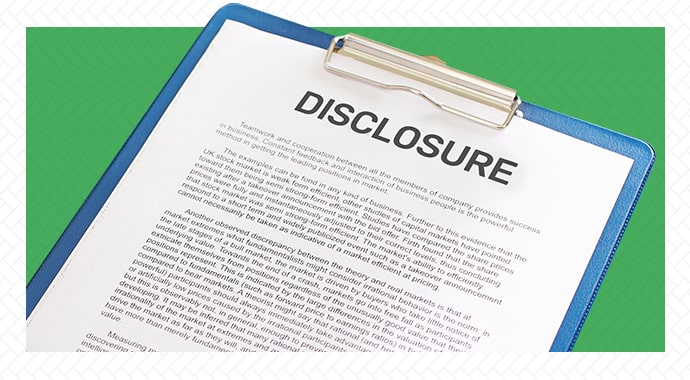
Arizona law requires sellers to complete a Seller’s Property Disclosure Statement, known in the Grand Canyon State as a “SPDS”. That’s pronounced as “spuds”.
The SPDS is a preprinted form that assists sellers by providing a checklist of items to be disclosed.
The document helps the seller avoid any mistakes that might omit material facts about the house.
Material facts are things that (when known) would make a difference to a buyer in deciding to buy your house.
This doesn’t mean you need to hire a professional inspector and disclose every detail, but the items on the form must be addressed.
If a buyer asks about an issue, even if that issue isn’t specifically listed on the disclosure, you must answer truthfully with what you know.
What specifically does the Arizona SPDS ask?
- Selling a house with termite damage (from a past or present infestation) needs to be disclosed. The Arizona State Office of Pest Management keeps records of termite reports and treatments. If you don’t remember specific dates to include on your disclosure, contact the office to refresh your memory. Bed bugs are also on the required disclosure list. They must also be disclosed.
- It’s mandatory for people selling a house to disclose the presence of polybutylene pipes or lead pipes, any drinking water problems, septic system failure and foundation issues.
- Selling a house that has soil erosion, or the presence of asbestos, toxic mold, radon gas, or lead-based paint requires a disclosure. Any underground fuel or chemical storage tanks on the property also need to be disclosed.
- Homeowners selling properties located in flood zones or areas with fracking must disclose those facts. And selling a house that requires flood insurance needs specific details about the policy to be included on the form.
- Selling a home near a military base or one that’s located in restricted air space are facts that need to be shared on the disclosure form.
- Owners selling a house with water damage or fire damage, or a home that has been used as a “clandestine drug lab” must disclose this information.
- Selling a house with permitted or unpermitted work done to it requires listing those changes on the disclosure form.
- You can leave stuff behind when you sell your Arizona house ‘as is’, but that must be disclosed on both the SPDS and on the sales contract. The buyer must also agree to handle the disposal of the items the seller leaves behind.
If you own a haunted house, it’s recommended that you disclose that condition, even though it’s not specifically listed on the SPDS form.
If you use a real estate professional, the agent must also disclose what they know about your house as an addition to the SPDS disclosure.
The written disclosure also asks that you attach copies of all receipts, permits and documentation for any work, and modifications or repairs done to your house.
You’re offering the buyer full disclosure by following that recommendation.
Expert Insight
What are the common pitfalls related to properly disclosing the home’s condition?
Selling as-is in Arizona does not mean selling without disclosure. You’re still required to disclose known material defects.
The issues that catch sellers off guard most often are stucco moisture intrusion, HVAC stress from extreme heat, termites, mold, and sewer line problems.
Get a pre-listing inspection before you decide to sell as-is. Know what’s there, then price accordingly.
— Irina Ahdoot, Grigg’s Group powered by The Altman Brothers, Luxury Real Estate Agent
For Arizona “as-is” sellers, the danger is sloppy disclosure: incomplete SPDS answers, unpermitted work, roof leaks, termites, drainage, HVAC problems, HOA disputes, solar leases, or boundary/access issues.
In land acquisition work, I learned that buried title, access, and entitlement problems often cost more than visible property defects.
— Craig Cherney, High Desert Family Law Group, Attorney
Another mistake is answering disclosure questions based on the property’s current appearance rather than the seller’s actual knowledge.
For example, repairing and repainting an area affected by a prior leak does not necessarily make the history of that leak irrelevant.
The same concern applies when a problem was repaired previously but could still be material to a buyer’s decision.
Sellers can also create problems by guessing. If they genuinely don’t know the answer to a disclosure question, they should not speculate simply to complete the form.
Likewise, they should avoid minimizing a known condition or making representations about matters outside their expertise.
I encourage sellers to be thorough and accurate with Arizona’s Seller Property Disclosure Statement and to discuss questions about their specific disclosure obligations with their real estate professional and, when appropriate, a qualified Arizona real estate attorney.
From a practical standpoint, good disclosure protects the transaction as well as the buyer.
Discovering a significant issue late in escrow — or after closing — can create a much larger problem than addressing a known condition upfront.
An “as-is” sale can establish expectations about repairs and negotiations, but it should never be viewed as permission to conceal known material information about the property.
— Jim Gruler, Seeking Agents®, Co-Founder
Should I Sell My House As Is in Arizona?

Making a list of advantages and disadvantages can help you answer the question, “Should you sell your Arizona house ‘as is’ or fix it up?” Let’s do that now.
Pros of Selling Your House As Is
- You won’t need to locate and pay workers to do the repairs. You’ll also avoid the tiresome responsibility of supervising the repair work at the house.
- ‘As is’ sales move faster because you’re not waiting for repairs. That’s particularly true if you work with a cash house buyer in Arizona who actually looks for rundown homes to buy and fix.
- You’ll miss the back-and-forth negotiations over repairing items found by a real estate inspector in Arizona. These can take days, sometimes weeks to resolve.
- Many times, the buyer will skip hiring a professional home inspector with an ‘as is’ sale. If you have prospective buyers paying for home inspections, these reports must also be shared with future buyers if the first sale doesn’t close. Omitting those inspections is to the seller’s advantage.
- ‘As is’ sales generally don’t require open houses. That means your neighbors won’t be touring your house. An Arizona cash property buyer, for example, doesn’t require open houses to find properties.
Cons of Selling Your House As Is
- Traditional home buyers typically want to move in and not have a long list of repairs to do. Your potential buyers will be limited to a small segment of the large pool of home buyers when you sell ‘as is’.
- Repairs are costly, and your offers and sale price will be lower compared with a house in move-in-ready condition. The lower offer reflects the cost of those repairs as well as time and effort invested in them.
Before making your final decision, it also helps to consider the recurring costs during the repair period.
Mortgage interest, insurance fees, and utilities paid during the repair period can add up quickly and be significant.
Those costs might also tip the scales in answering the question, “Why sell an Arizona house ‘as is’?”
A close look at the home seller closing costs can help you decide if an ‘as is’ sale offers the best avenue for you.
You may decide that selling to a cash real estate buyer in Arizona is the best option after you’ve calculated the expense and time spent during a traditional sales transaction.
What happens when you sell your house ‘as is’ in Arizona? Let’s explore your options now. There are a number of ways to sell your Arizona house. The first one is to sell to an investor.
How to Sell a House As Is By Owner Without an Agent in Arizona
How to Sell a House As Is, Fast and For Cash Directly to an Investor
Before considering the pros and cons of selling your home to an investor, we need to talk about this group of buyers who move quickly to close sales.
Who Are Cash House Buyers?
Cash house buyers are investors. They want your house, and they’ll pay cash rather than use a loan to buy your property. Most often, they buy homes for rental income.
Arizona property investors also buy houses to rehab and then resell to other buyers.
What types of sellers do cash house buyers look for? They seek out a wide variety of Arizona real estate investment opportunities, including:
- financially challenged owners selling a house with unpaid property taxes
- people selling a damaged house
- couples selling a house before or after a divorce
- homeowners selling a home to avoid foreclosure
- heirs selling an estate home
- workers selling a home for a job relocation
- seniors selling to downsize
Arizona investor-friendly title companies work with cash buyers to ensure the sales move quickly through escrow. They have experience working with investors and cash sales.
How does selling a house ‘as is’ work in Arizona when using an investor? ‘As is’ sales to investors follow the same process as sales to traditional buyers except you eliminate the listing and marketing.
There are a number of advantages to selling a house in Arizona directly to an investor or a company that buys properties.
Pros of Selling Your House As Is Directly to an Investor
- A cash house buying company offers a quick transaction. They have cash on hand to close fast. You’ll skip the time waiting for loan applications, approvals, and mortgage underwriting required in traditional mortgage-financed sales.
- Investors generally forgo home inspections. That saves you time when you don’t need to negotiate over defects found by a home inspector.
- If you sell your home yourself and the investor also skips representation by a real estate agent, there aren’t any commissions involved in the sale. That saves you money since the seller pays commission fees in most traditional home sales.
- Investors typically pay both buyer’s and seller’s closing costs. These fees include title, transfer and recording fees and escrow services. Those fees can be significant.
Those advantages need to be contrasted against the negatives.
Cons of Selling Your House As Is Directly to an Investor
- The price an investor offers won’t be market value. It will be less because they discount their offer by using the cost of the home repairs and factor in their costs of doing business.
- You don’t have the training or the experience of a professional real estate agent. You’ll need to be your own fiduciary and research what will be in your best interests to evaluate the contract and conduct sales price negotiations. You have the option, however, of bringing in an Arizona real estate attorney to review the contract language.
Finding the Best Cash House Buying Company
You’re now thinking that you might want to talk to a local cash house buying company. Where do you find them?
That question is easy to answer. Locate investors quickly by using the internet. Use your favorite web browser and type in a keyword.
This works best when you narrow the search to your state and city. If you live in a rural area, use the nearest city to bring up a list of local investors.
Some search term suggestions include:
- cash house buyers in Flagstaff AZ
- we buy houses in Flagstaff AZ
- ibuyer companies in Flagstaff AZ
- sell my house for cash in Flagstaff AZ
- sell my house fast in Flagstaff AZ
Look for an “About Us” page on the cash house buyer’s website. This should identify the company staff and provide some basic resume experience.
Note any memberships in professional business organizations. This is important because it demonstrates that the company leaders consider investing a professional occupation.
How to Choose an Ethical Investor?
There are many investors. How do you find one who is ethical and can close the deal?
It takes a little time, but you can find a quality investor by doing several things before you request a cash offer.
- Investigate prior buying experiences. Make sure the investor has at least three years in the industry. That gives them some expertise in the investment field.
- Check references. Your investor should have a contact list of former clients and be willing to share that with you. Contact several to ask about their experience with the investor.
- Research the investor by using the local branch of the Better Business Bureau (BBB). Look for complaints and check to see if they were resolved to the satisfaction of the homeowner.
- Research online consumer review websites to see if your investor is mentioned and what types of issues other sellers had with the person or company. If you see too many negative comments, it’s time to consider another investor.
Expert Insight
What should home sellers look for when screening cash house buyers?
These companies often use assignment clauses that allow them to sell your contract to another buyer without disclosing it upfront. Compare net proceeds, not just the offer price.
— Irina Ahdoot, Grigg’s Group powered by The Altman Brothers, Luxury Real Estate Agent
— Craig Cherney, High Desert Family Law Group, Attorney
How to Sell a House As Is by Listing It by Owner
The next option is to sell the home yourself as a ‘for-sale-by-owner’ offering. That’s known as “FSBO”.
In an FSBO sale, you have full control over selling your home. You handle everything — from setting the price and creating listings to showing the property and negotiating offers.
It’s a great way to avoid paying agent commissions, but it does mean putting in much more effort to manage the process yourself.
One of the first steps is to find out what your home is worth. You can check out local listings, use online tools, or seek a professional opinion from a Realtor or an appraiser to get an accurate estimate.
Where Can You List a House For Sale by Owner?
- FSBO listing sites offer a free online way to share information about your home.
- Door hangers and snail-mail postcards let your neighbors know that your house is for sale. They may have friends or family interested in moving into the neighborhood.
- Flat-fee MLS brokers provide a way for you to have your sale house appear on your local multiple listing service. This makes your home available for local real estate agents serving buyers in your area.
- A yard sign is a good advertisement particularly in areas with heavy commuter traffic. In slow markets, however, you may sit with a sign for a long time without any interest from buyers.
Going it alone has some major advantages.
Pros of Selling Your House by Listing It by Owner
- You’ll be off the hook for at least half of the commission fee when covering your side of the sale. Arizona agent commissions are negotiable, but they typically run 5-6% of the sales price. The two agents in the transaction split this fee.
- You are the boss of your sale. You have control over everything and can set your own calendar for the transaction.
- You can market to a traditional homebuyer and also to investors when you supervise your side of the sales transaction. That means more potential buyers and a chance for a higher sales price for your house.
There are some disadvantages to also consider when you market your house as an FSBO.
Cons of Selling Your House by Listing It by Owner
- Real estate professionals are trained to put your interests first. Working the sale yourself means you won’t have that training or experience to back you up during the sales transaction.
- Arizona home sales involve a number of technical legal issues, including the property disclosure. Mistakes might result in a canceled sale – or worse, if you’re sued for those mistakes. As the official sales representative for your house, you’ll be responsible for understanding the ‘for sale by owner’ seller closing costs.
Expert Insight
What are the common pitfalls when selling a house by owner?
— Irina Ahdoot, Grigg’s Group powered by The Altman Brothers, Luxury Real Estate Agent
— Craig Cherney, High Desert Family Law Group, Attorney
Sellers need to think about photography, property descriptions, showing availability, buyer inquiries, open houses, security, and how buyers will discover the property.
— Jim Gruler, Seeking Agents®, Co-Founder
How to Sell a House As Is in Arizona with an Agent

The final selling option we’ll cover is to use a professional real estate agent.
Who Are Real Estate Agents?
Arizona real estate professionals are trained to represent your interests during a sales transaction. They put your interests first and foremost during every step in the sale.
Agents are licensed by the state and work under the supervision of a sponsoring broker. Failure to follow the law means fines, suspensions, or even revocation of an agent’s license.
Arizona law specifies real estate training and taking detailed courses required to apply for a license.
As a licensed professional, agents will guide you through the transaction from the listing through the closing.
Many agents also have a list of trade and professional people to assist you in completing the sales transaction and your move once the house sells.
Pros of Selling Your House As Is with a Real Estate Agent
- Realtors have access to a database of comparable sales in your neighborhood. Pricing aggressively ensures you receive the highest selling price. Agents also have experience in negotiating contracts, and this also can bring a higher price for your property.
- An agent signs an agency disclosure saying they’ll represent you as a fiduciary duty. Your interests will be paramount over the buyer in the sales transaction.
Cons of Selling Your House As Is with a Real Estate Agent
- Realtor costs when selling a house are higher when using an agent. Arizona closing costs list commissions when working with an agent who represents each side in the sale. Sellers generally pay for both sides of the sales commission. If you use an agent, you will pay your agent, besides the buyer’s agent.
- Real estate agents typically work with buyers who need to qualify for mortgage loans. This takes time to complete, even when the buyer has been pre-qualified by a lender or a mortgage broker. Loans require appraisals and underwriting, and that adds weeks to the closing calendar.
How to Choose an Ethical Real Estate Agent?
Arizona has a number of professional agents. Picking an effective one that’s also ethical takes a bit of effort. Some ways to locate a quality agent include:
- Asking friends and family for agent recommendations. First-hand experience is the best type of endorsement.
- Looking to see if the prospective agent is a member of a professional trade organization. An Arizona Realtor (a state member of the National Association of Realtors) takes an oath to uphold a code of ethics. That code is an addition to the state legal requirements to hold an agent license.
- Locating professional agents with experience in selling ‘as is’ properties. An agent should also be knowledgeable about the specific neighborhood where your house is located.
- Checking with the local board of the Association of Arizona Realtors and the Better Business Bureau to see if your prospective agent has any complaints filed against them.
- Consulting the Arizona Department of Real Estate to discover any complaints or official sanctions registered against the agent.
- Reviewing online rating websites to read comments by former clients. If there are a number of complaints, it’s time to find another agent.
We’ve reviewed the basics of selling your house ‘as is’ in Arizona. The next step is to select the avenue you want to use to sell.
Expert Insight
What should home sellers look for when screening real estate agents to hire?
Too often, sellers choose the first agent they meet, the agent who suggests the highest listing price, or someone they know personally without comparing what that agent will actually provide.
In Arizona, I recommend sellers start by verifying that the agent has an active real estate license and then ask about their experience with the seller’s specific property type, price range, and local market.
Years in the business can be useful, but relevant recent experience matters, too.
— Jim Gruler, Seeking Agents®, Co-Founder
Also, pay attention to how they communicate in the first conversation. That’s exactly how they’ll communicate throughout the entire transaction.
— Irina Ahdoot, Grigg’s Group powered by The Altman Brothers, Luxury Real Estate Agent
— Craig Cherney, High Desert Family Law Group, Attorney
