
Selling a House With Structural Damage Problems in 2026 [2 Best Ways]
Even though the information on this web page is provided by a qualified industry expert, it should not be considered as legal, tax, financial or investment advice. Since every individual’s situation is unique, a qualified professional should be consulted before making financial decisions.
In the following guide, we will discuss the various ways you can sell a house as is with structural issues.
We’ll explain how you can sell a home with structural damage fast and easily, as well as compare this method to selling traditionally via a real estate agent.
Let’s get started.
Can You Sell a House With Structural Damage?
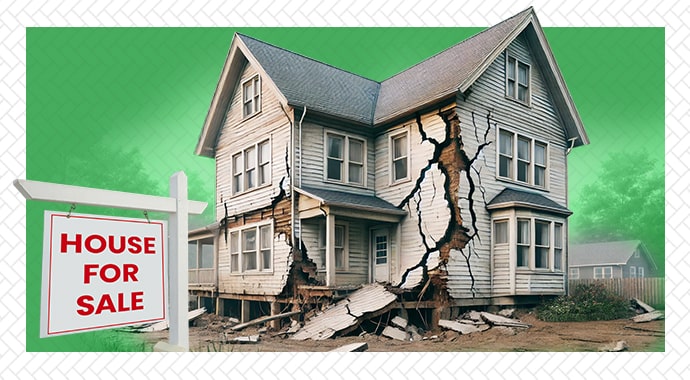
Selling a house with significant structural issues can be difficult. Such houses have little market appeal, which significantly limits your buyer pool.
Most home buyers are looking for turnkey homes they can move into immediately. This isn’t usually possible with properties having structural damage.
Still, there are two main ways you can sell the house:
- Sell it fast to an investor.
- Sell it traditionally via a real estate agent.
We’ll break down each option in the following sections.
Selling a House With Structural Issues Fast

Although it can be challenging to sell a home with a damaged structure, there is one way you can sell it fast.
Selling your house with structural problems quickly means that:
- You have to sell it as is.
- You have to sell it for cash.
Who Can Buy a House With Structural Problems As Is?
Selling a house with structural issues would require you to find a buyer who’s willing to handle the repairs needed.
The buyer will be responsible for finding the necessary contractors and paying for the restoration costs.
However, there are several issues with working with typical home buyers:
- Most buyers aren’t willing to restore a property — they want a house that’s ready for living.
- Most buyers need a mortgage, and lenders won’t provide financing for a property that needs major repairs.
- The mortgage application process takes time, and there’s no guarantee that a loan will be approved.
To sell your structurally damaged house fast, consider selling to cash investors. These professionals buy homes in bad condition as is and for cash.
Investors consider such properties as investment opportunities. They fix and either resell the houses or rent them out.
They will be interested in your property even if you are selling a condemned house or selling a house after a fire.
Pros and Cons of Selling a House With Structural Issues to a Real Estate Investor
By selling your property to an investor, you enjoy the following benefits:
- You don’t have to pay for and manage expensive and time-consuming repairs and cleaning — you can sell as is.
- Cash home investors buy and close fast (in as little as 30 days) and with minimum bureaucracy.
- You won’t have to wait through lender-required inspections and appraisals, so you can save time.
- Professional cash buyers don’t require a mortgage. This means they don’t rely on a lender to approve the purchase of your property, saving you time and headache.
- Investors cover your closing costs, unlike typical buyers.
- You avoid paying the high cost of selling a house with a realtor, since you don’t have to hire a real estate agent in a sale to a professional cash buyer.
That said, there is one drawback of selling a structurally damaged property to a cash buyer: the offer may be lower than the property’s market value. This is because the buyer has to account for repair costs and their profit margin.
Also, not having to pay an agent commission and other closing costs compensates for the lower offer than the one you might get from a typical buyer, provided they are ready to take on repairs and pay the as-is market worth for your home.
You may learn more about how much you lose selling a house as is.
How Does Selling to a Real Estate Investor Work?
Here is the normal process of selling your home to a real estate investor:
- Request a cash offer from a real estate investor.
- Meet an investor at your property so they can assess it.
- Review an offer from the investor. It’s usually sent to you within one day after the walkthrough.
- If you like the offer, sign a contract with the investor. The cash buyer will put money in escrow and take care of the rest of the process.
- Close on the property in 3 to 30 days after the contract is signed and get your cash.
Where to Find a Good Real Estate Investor
Working with cash buyers means you have to find reliable investors in your area, which can be more practical than dealing with typical buyers. But it isn’t always easy to find an ethical and reputable one.
At HouseCashin, we’ve partnered with seasoned and professional cash investors nationwide. All the investors on our platform have been rigorously vetted for experience and high ethical standards of service.
To get started, fill out and submit a cash offer request form on our website. You may receive several no-obligation cash offers from investors working in your area. If you accept one of the offers, expect to close in 30 days or less.
Get cash offers for your property with structural damage now.
Selling a House With Structural Problems Traditionally

Another way of selling a damaged house is going the classic way: listing and advertising it either by using a realtor or by yourself (FSBO).
However, the process of selling traditionally is more complicated compared to selling to an investor, as it requires making repairs.
The following sections highlight what a traditional sale entails for a house with structural issues and the pros and cons of selling the property traditionally.
Address Structural Issues and Foundation Problems
It’s unlikely to sell an old house with structural damage to a typical buyer as is. Some realtors won’t even take on listing and marketing it without repairs. So, you will have to fix it first.
The costs of repair vary, depending on the affected components and the severity of the damage, so it’s important to get accurate repair estimates.
The following is a breakdown of a property’s structural components and estimated repair/replacement costs:
- Electrical wiring: Issues with the wiring caused by foundation damage may require repair or complete replacement depending on what caused the damage. Minor repairs may cost a few hundred dollars, while complete replacement costs up to $20,000.
- Walls and beams: Repairing cracks, holes, and water damage may cost up to $1,500, while replacing major support beams costs between $3,000 and $25,000.
- Roofing: Minor roof repairs typically cost between $400 and $2,000, while entire replacement ranges between $5,900 and $12,900. Learn more about selling a house that needs a new roof.
- Foundation: The average cost for foundation repair is $5,500. Learn more about selling a house with foundation issues.
- Mold issues: If the damage was caused by mold, its removal may cost between $400 and $7,000, depending on the size of your home and the extent of the mold problem. Learn more about selling a house with mold and selling a water-damaged house.
What Does a Traditional Real Estate Sale Entail?
When selling a house with structural damage traditionally, you can choose to involve a realtor or sell it by yourself as a FSBO. Here are the steps involved in a classic sale:
- Assess the damage: Hire a professional contractor to evaluate the degree of damage and get cost estimates for the repairs.
- Set a suitable price: An agent will conduct a CMA (comparative market analysis) to determine the right selling price. If you’re selling by yourself, use online property valuation tools (try our home value calculator) and local market data.
- Prepare the home for sale: This involves making the necessary repairs and cleaning the property.
- Market the property: In a traditional real estate transaction, your agent will list your house on the MLS and oversee advertising. If you’re selling the house as a FSBO, list it on real estate listing sites such as Zillow and Redfin.
- Negotiate offers: If you’re selling as is, expect lowball offers due to the damage. Conduct negotiations with potential buyers and sign a contract.
- Handle professional inspections: Potential buyers will require a lender-required property inspection before purchasing the house.
In some cases, there will be multiple inspections for specific problems: mold, termites, radon, and more. You must make your property available for a professional inspection.
- If the buyer is taking a mortgage, an appraisal will also be needed. If the appraisal shows a lower market value than your asking price, you will need to renegotiate the price with your buyer.
- Finalize the sale: Work with a title company to handle the paperwork. You can then sign the transfer documents and complete the sale.
If you choose to hire a realtor, they will oversee the entire sale process.
Pros and Cons of Selling a House With Structural Problems Traditionally
Selling a structurally damaged home the standard way has the following positive aspects:
- The real estate agent (if you decide to work with one) manages the formalities. They also protect the seller’s interests — a good selling price means they can earn high commissions.
- If the agent or the seller is experienced enough, they could sell the property at its market value.
There are also several downsides to selling traditionally:
- Realtor commission fees are high, between 3% and 6% of the total sale price. This is in addition to all other seller closing costs.
- You have to deal with inspection and repairs by finding contractors and paying for the required renovations.
- The marketing and sale process may last for much longer than a sale to an investor. A lot of time is spent on repairs, negotiating offers, and waiting for the buyer’s mortgage approval.
- Lenders require inspections and appraisals, which take time and lengthen the sale process.
- Potential buyers may be picky, and negotiations with them and their agents may be exhausting and time-consuming.
Next Step

Now that you know the different ways to sell your property, the next step would be comparing how much you can get for it by selling to a real estate investor versus using a real estate agent.
To do this, find a few local professionals and compare their offers. When talking to a real estate agent, don’t forget to ask for a quote on their commission, in addition to the estimated property price.
And as for real estate investors, fill out our quick online form to request cash offers and compare the offers coming from reputable professional cash buyers working in your area.
